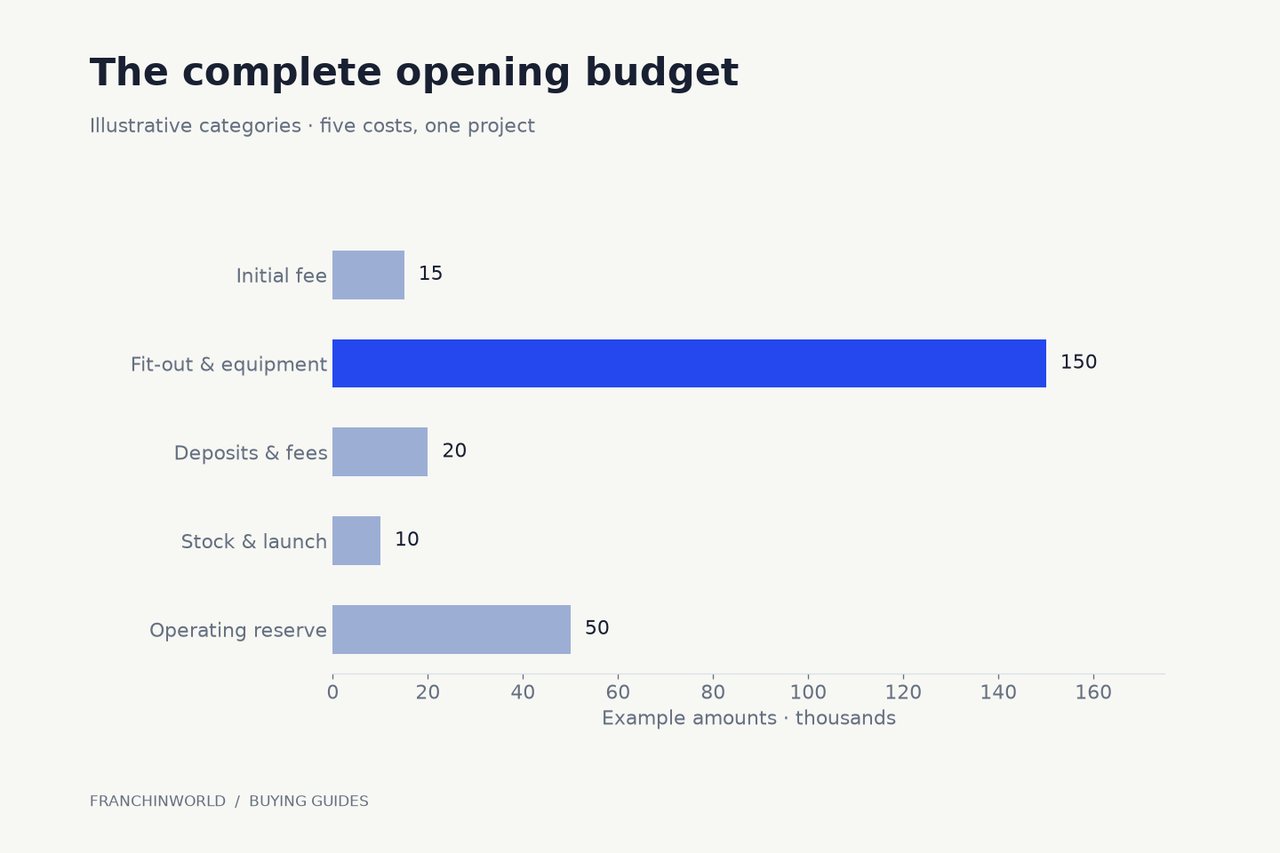
Separate the fee from the full opening budget
The franchise fee pays for a particular right under a brand’s agreement. It is not the price of a complete operating business. Your project may also need premises, fit-out, equipment, inventory, staff recruitment, deposits and enough cash to keep trading while sales develop. Start a worksheet with a separate row for each category rather than comparing two brands using their entry fees alone.
Keep eligibility tests in another column. Required liquid assets and net worth describe the applicant’s financial position; they are not automatically additional project costs. A brand may publish a minimum liquidity requirement alongside an estimated opening investment. Adding those two numbers together without understanding their meaning can double-count money.
Specify the location and business format
Write down the country, currency, restaurant or shop format and whether you are opening a new unit or acquiring an existing one. A small-format counter and a freestanding drive-through have different construction, staffing and property needs. A published range for one format should not become a quote for another.
Ask which costs the brand pays and which costs fall to you. Record any exclusions and the date of the estimate. For an acquisition, request a breakdown of the purchase price, equipment condition, lease obligations and any required refurbishment. An apparently cheaper existing shop may need additional spending after completion.
Budget for trading and ongoing charges
Before launch, model a period in which the business pays rent, wages, utilities and suppliers while sales are still uncertain. Your personal living costs also need a separate plan if you will leave paid employment. Avoid assuming that revenue from the first weeks will immediately cover every bill.
List royalties, advertising contributions, technology charges, delivery costs, insurance and local marketing obligations. Note the calculation basis for each charge. A percentage of sales is different from a percentage of profit. For the US disclosure framework, consult the FTC’s franchise buying guide and request the current disclosure document for the actual offer.
Stress-test the budget before choosing a brand
Make a second version of your worksheet with a later opening date, higher fit-out costs and slower sales. Identify which bills still have to be paid and where extra funds would come from. Ask the franchisor which assumptions it can support and which estimates require quotes from your local contractors, landlord or advisers.
The worksheet below simply adds opening-cost categories. It uses illustrative figures rather than any particular franchise’s offer. Replace every input with your own verified estimate, keep records of quotations and review the result with appropriate advisers before committing funds.
What will it take to open?
Frequently asked questions
Is the franchise fee the whole opening cost?
No. Check fit-out, equipment, deposits, licences, stock, launch spending and working capital, and avoid double-counting items already included in a package.
Does the calculator use brand quotes?
No. The defaults are illustrative and must be replaced with project-specific figures.
Does changing currency convert the values?
No. It changes the display label only; convert your inputs separately before comparing projects.
This is a general research framework, not legal, tax or financial advice. Requirements depend on your country, brand and proposed transaction.
Continue your research
Explore brand guides and follow the official sources in each guide to verify local terms.