Funding & fees
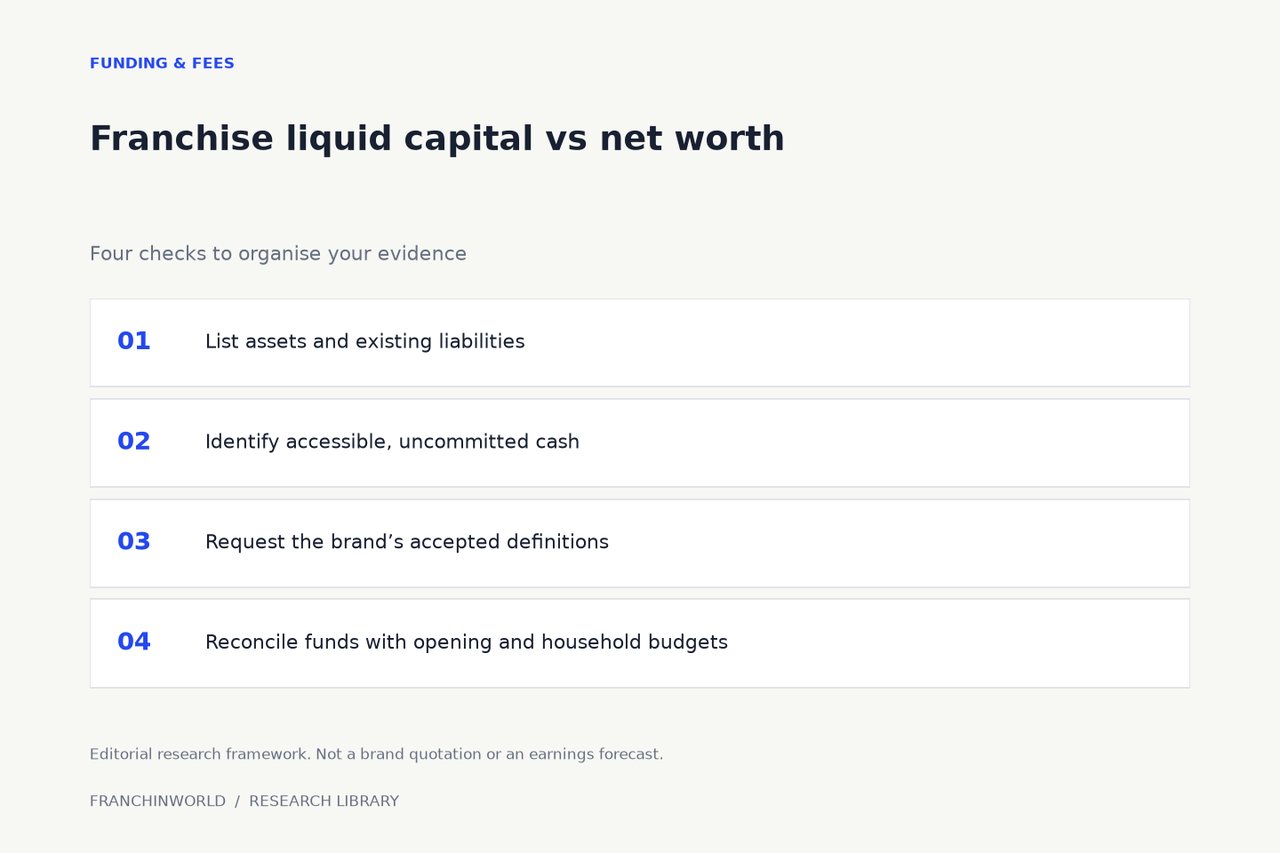
Franchise liquid capital vs net worth: what is the difference?
Separate accessible cash, total wealth and opening funds before assessing franchise eligibility.
Your research toolkit
Explore costs, due diligence, business models and day-to-day operations. Choose a topic or browse the articles below.
Separate investment, payment timing and owner cash. Use worked examples to build better questions for your own budget.
Funding & fees
Separate accessible cash, total wealth and opening funds before assessing franchise eligibility.
Funding & fees
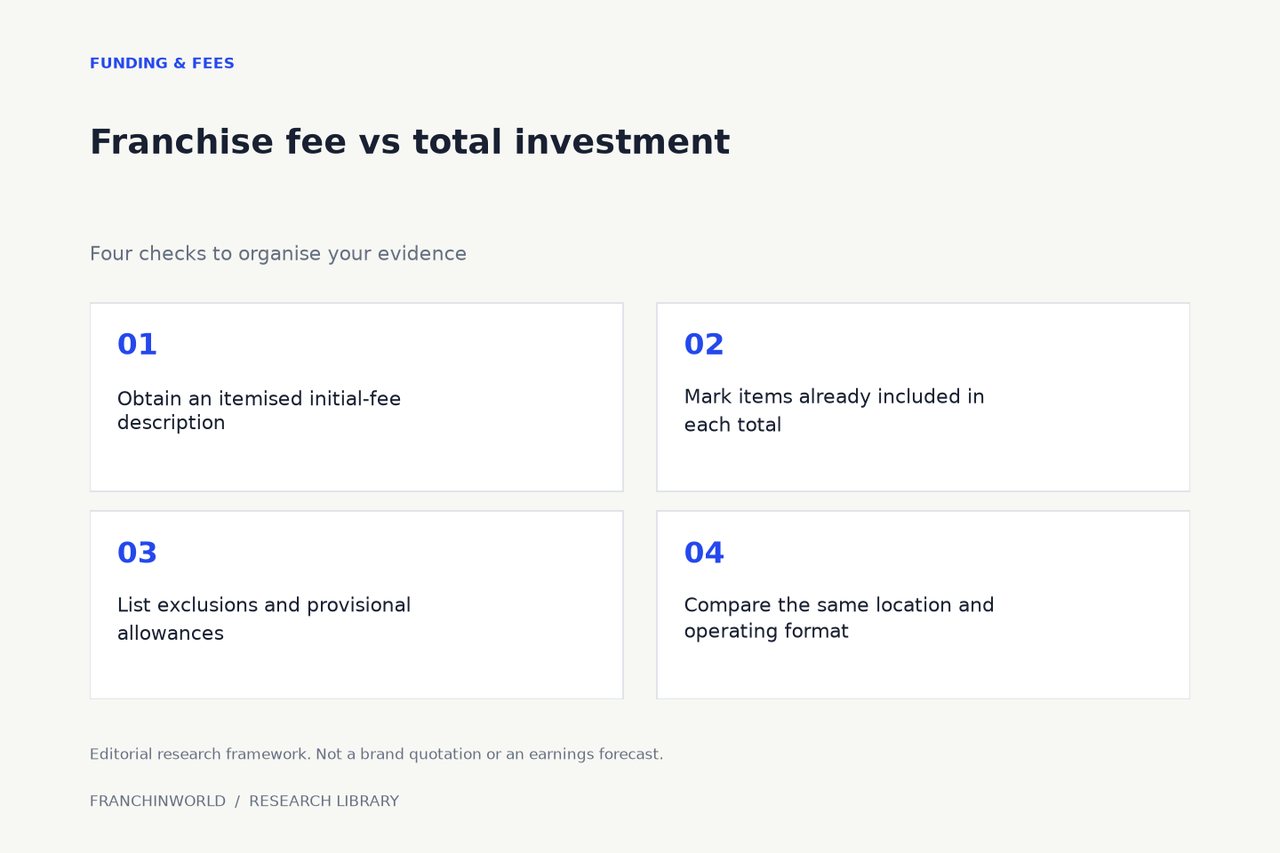
Understand what an initial fee covers and reconcile it with the complete franchise opening budget.
Funding & fees
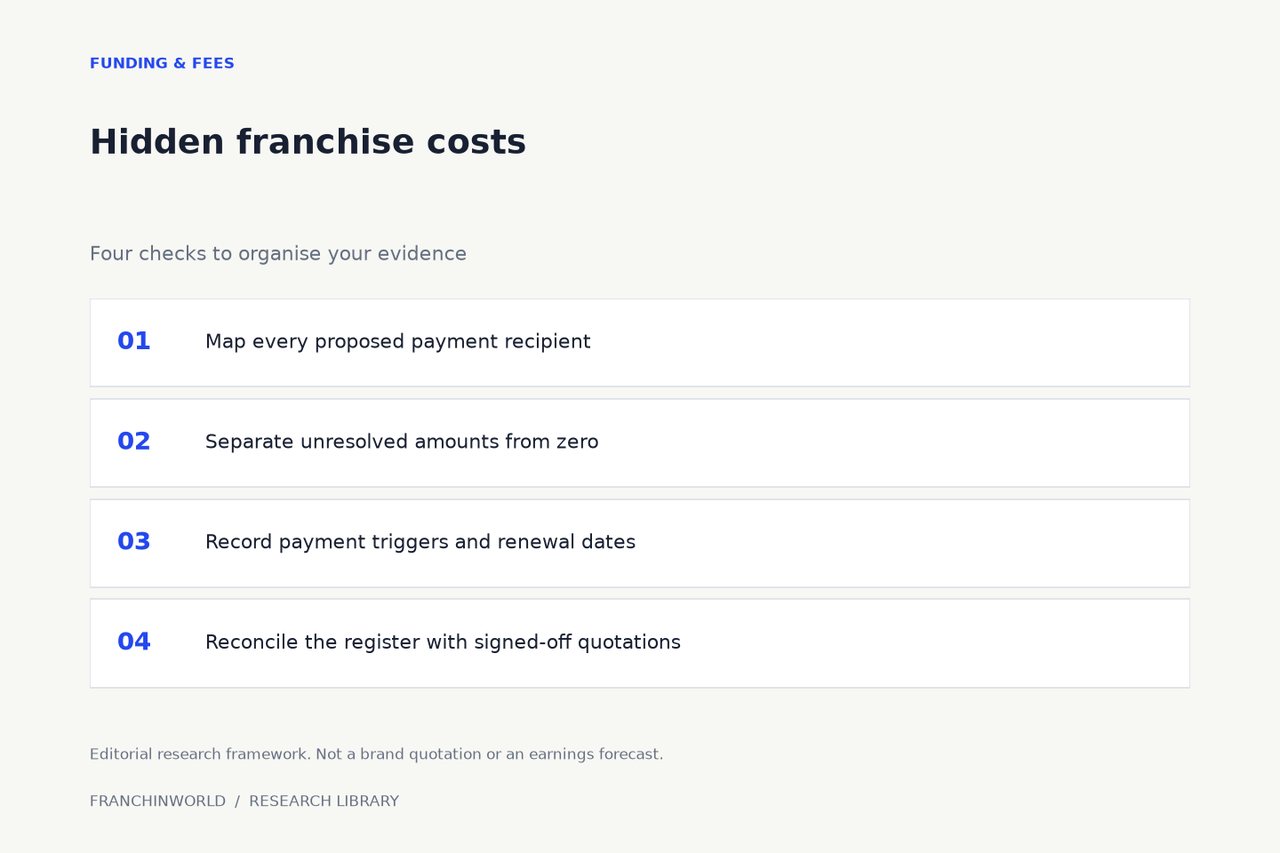
Find unquoted costs, payment dates and conditional charges before committing to a franchise.
Funding & fees
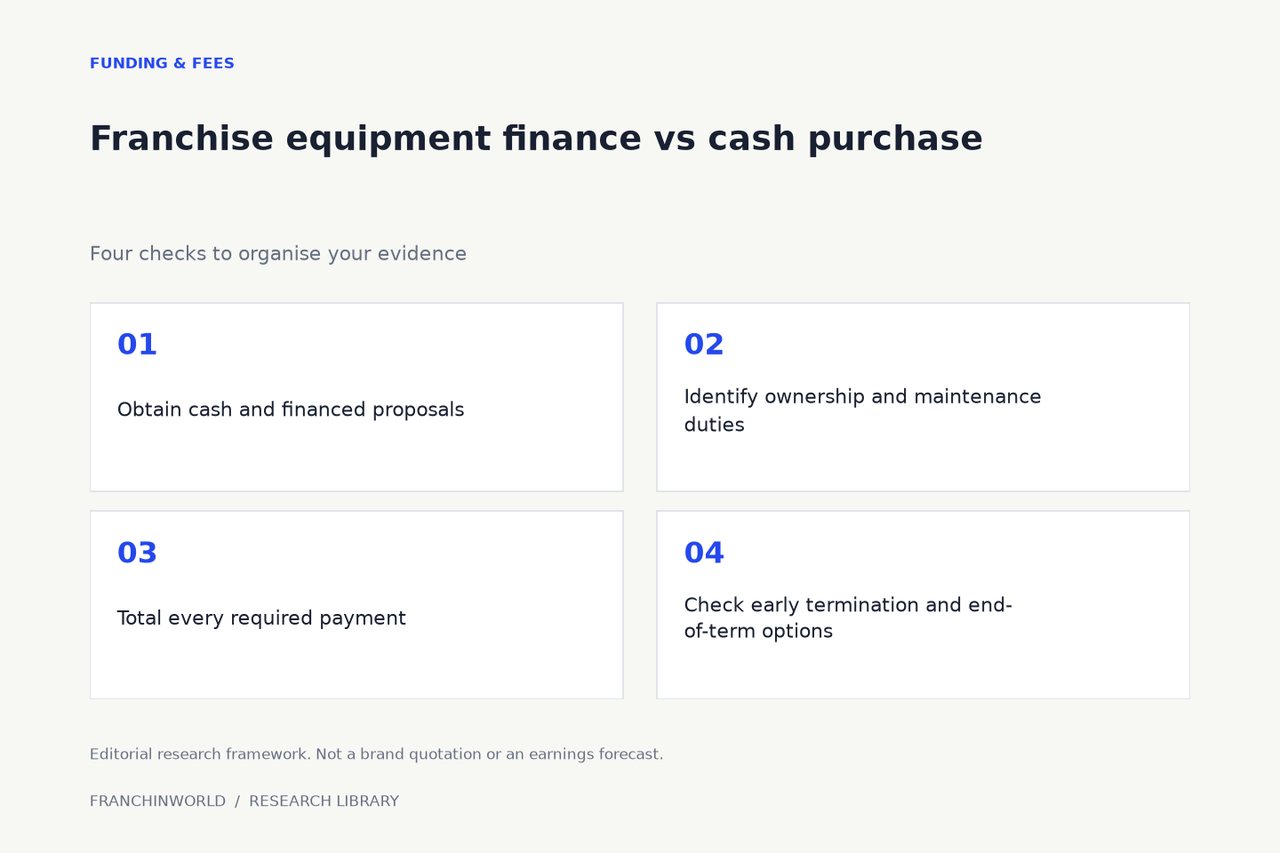
Compare deposits, recurring payments, ownership and exit terms for franchise equipment.
Funding & fees
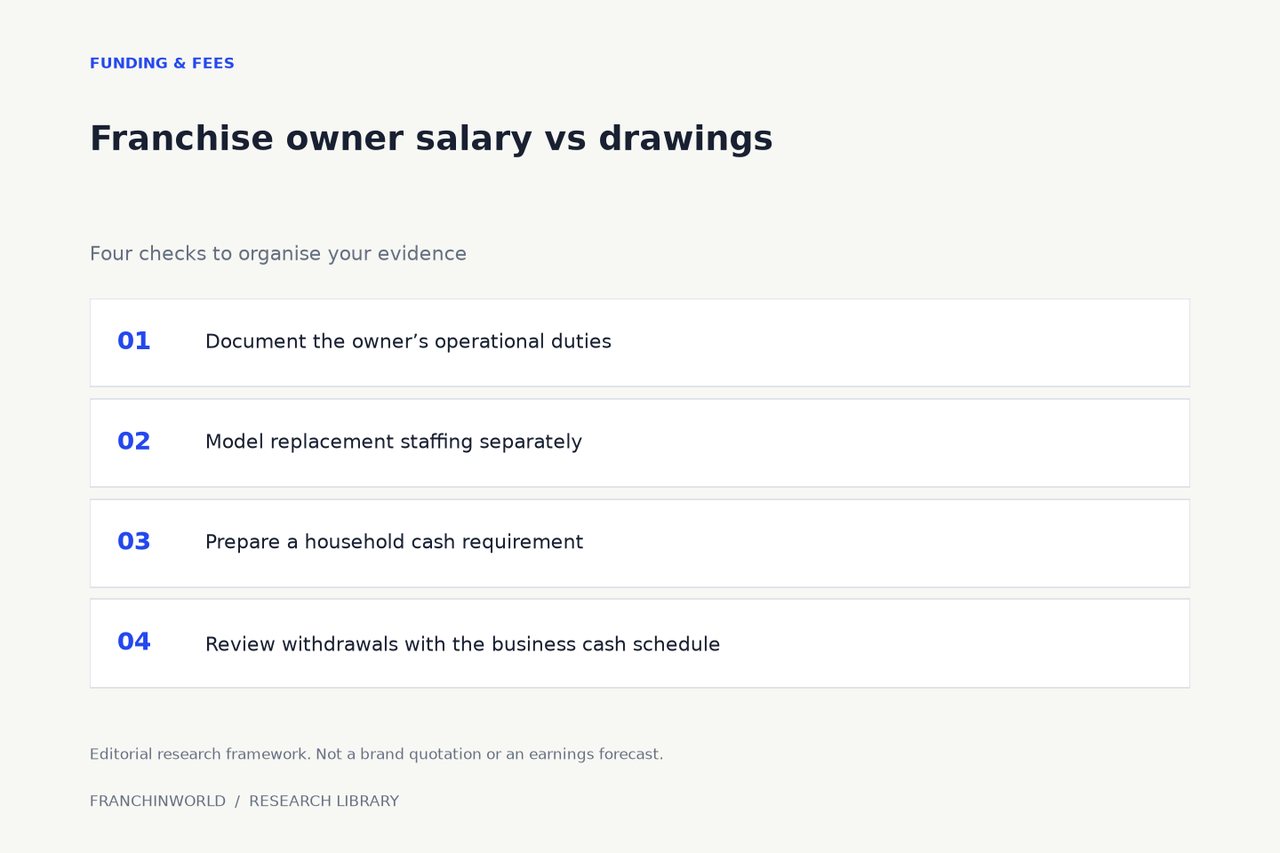
Separate the owner’s labour cost, household withdrawals and business cash capacity.
Funding & fees
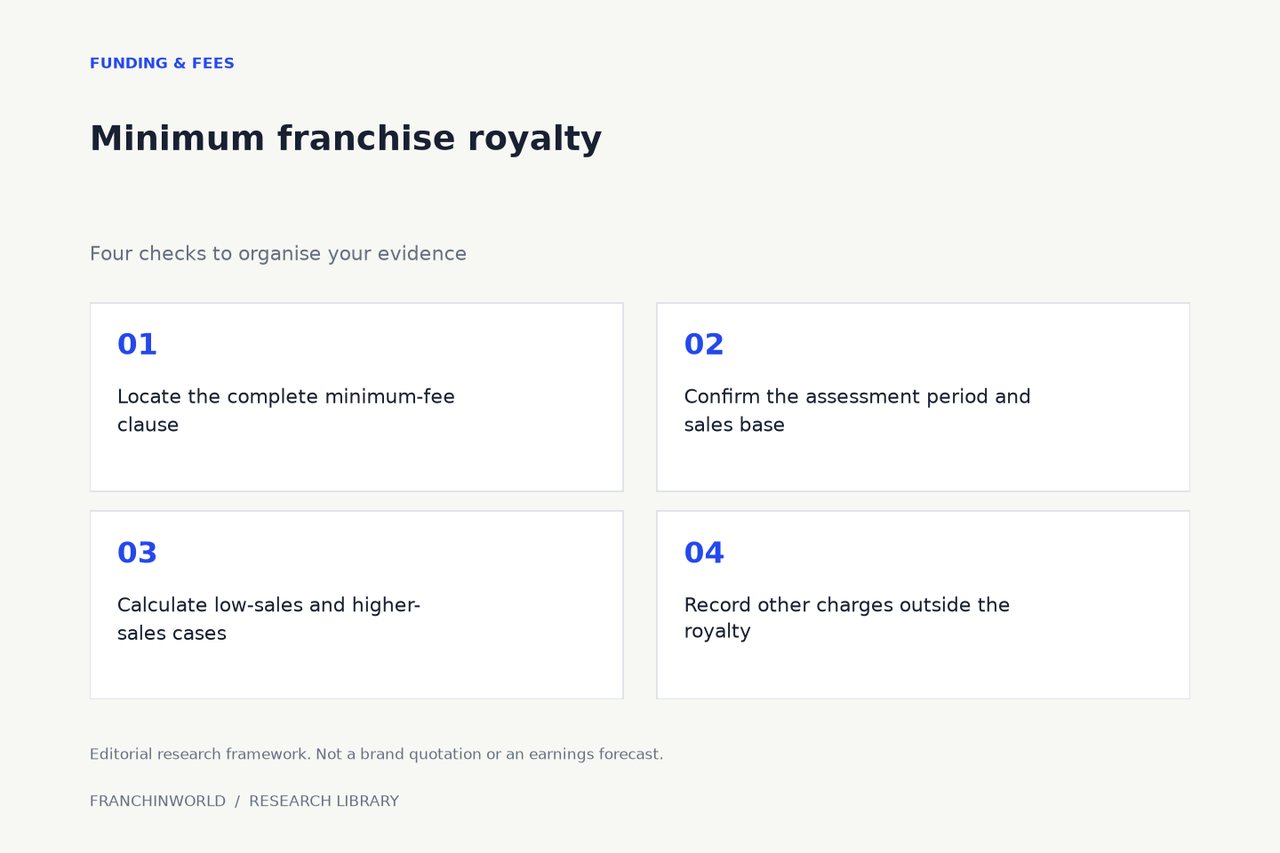
Check how fixed minimums and sales-based royalties interact in a franchise fee model.
Funding & fees
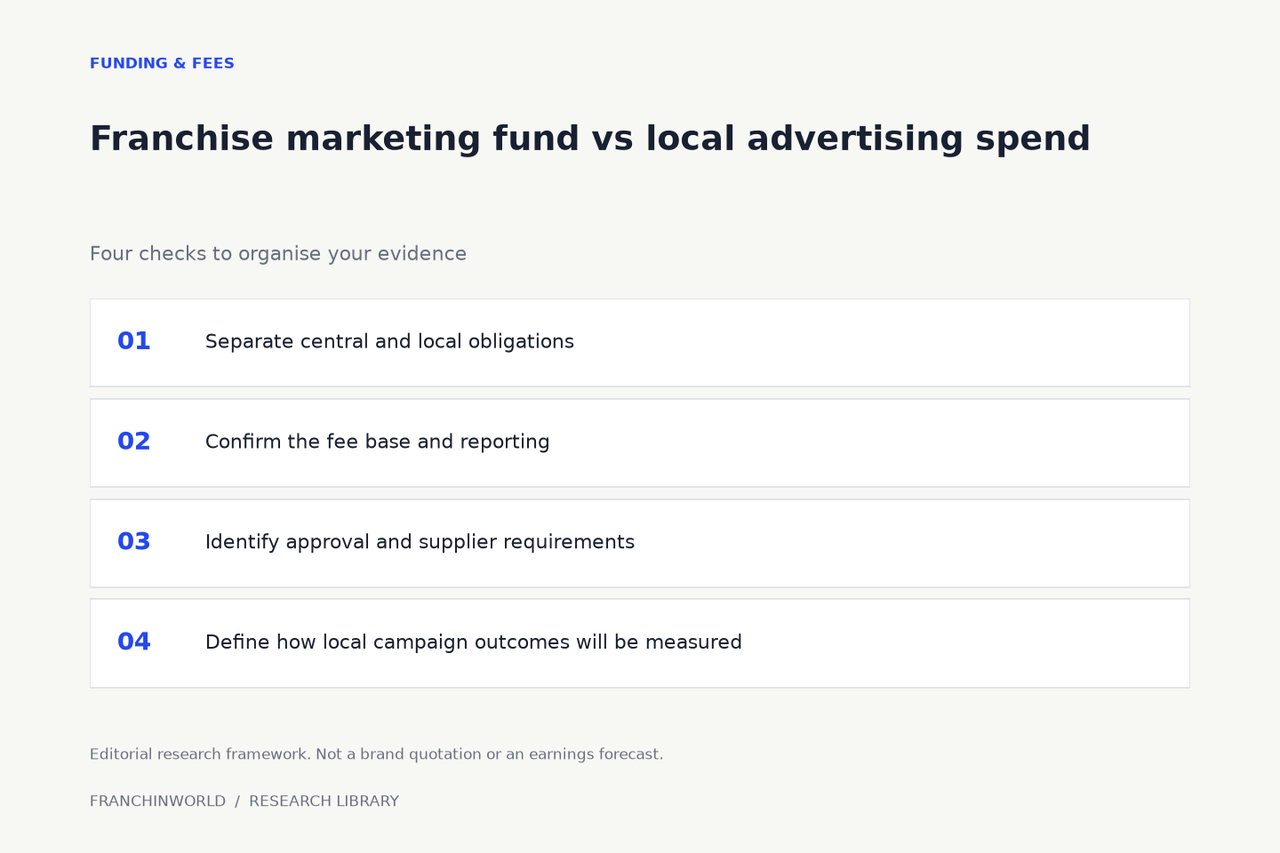
Distinguish network contributions, mandatory local spending and your launch campaign budget.
Funding & fees
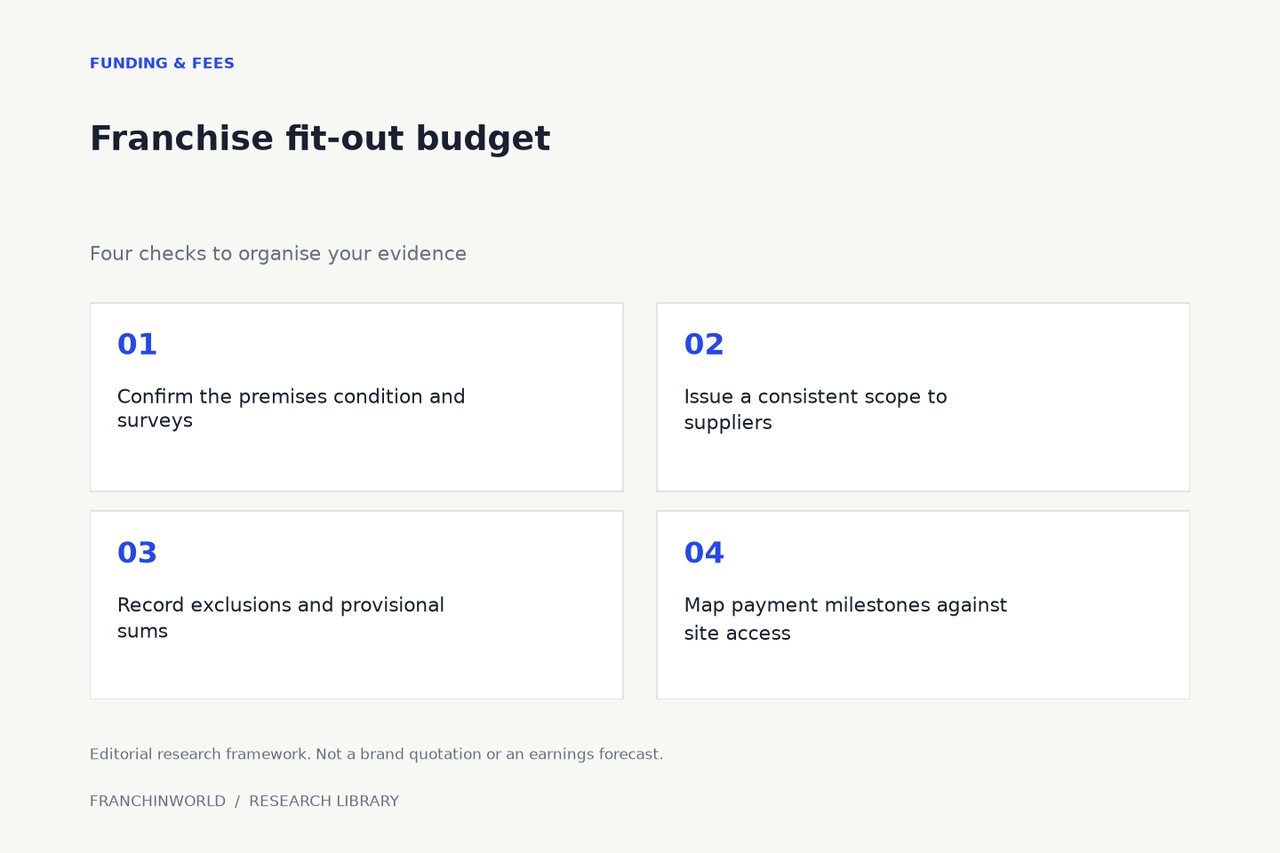
Build a site-specific fit-out register covering scope, dependencies and payment milestones.
Funding & fees
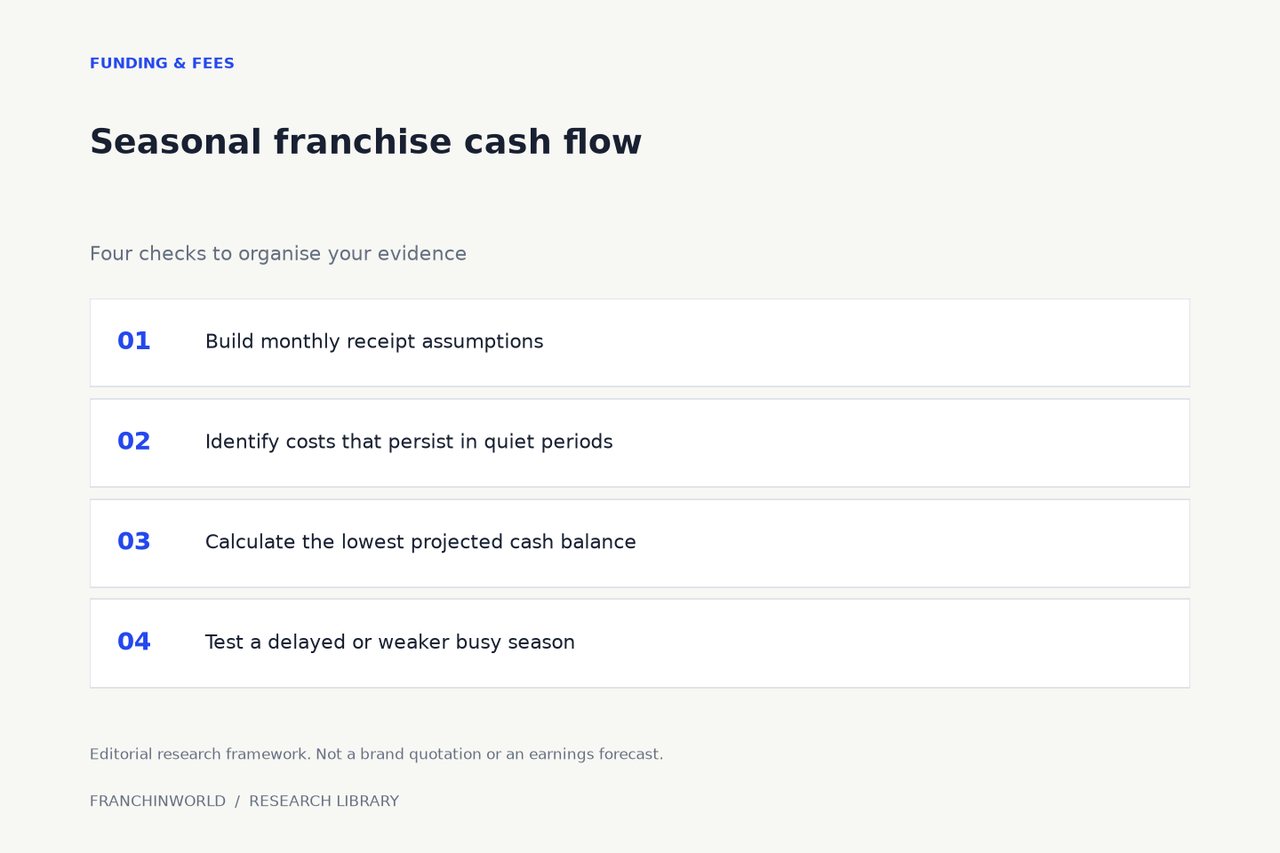
Model quieter trading periods, uneven payments and reserve requirements month by month.
Funding & fees
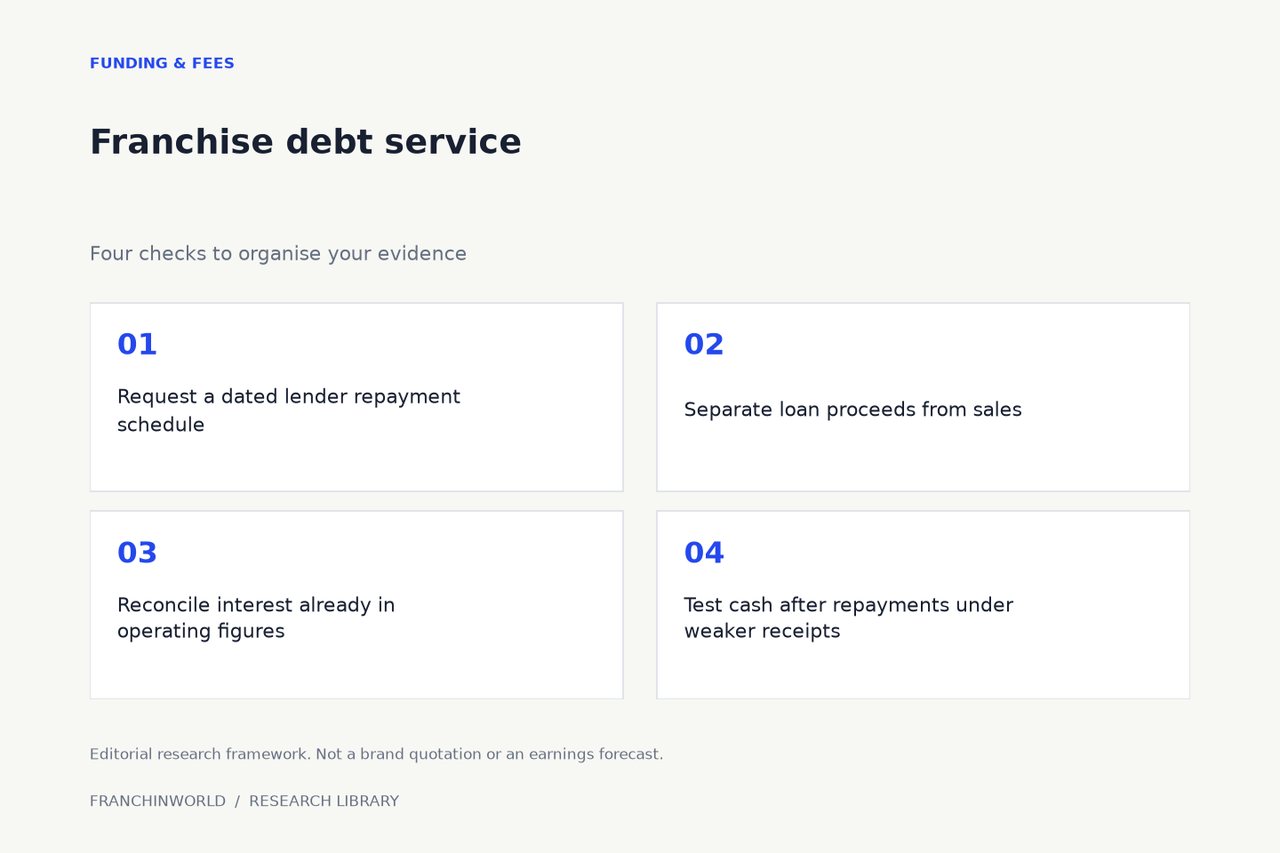
Add interest, principal and payment timing to a franchise cash model without double-counting.
Investigate the offer, people and contractual commitments before moving from a shortlist to a transaction.
Due diligence
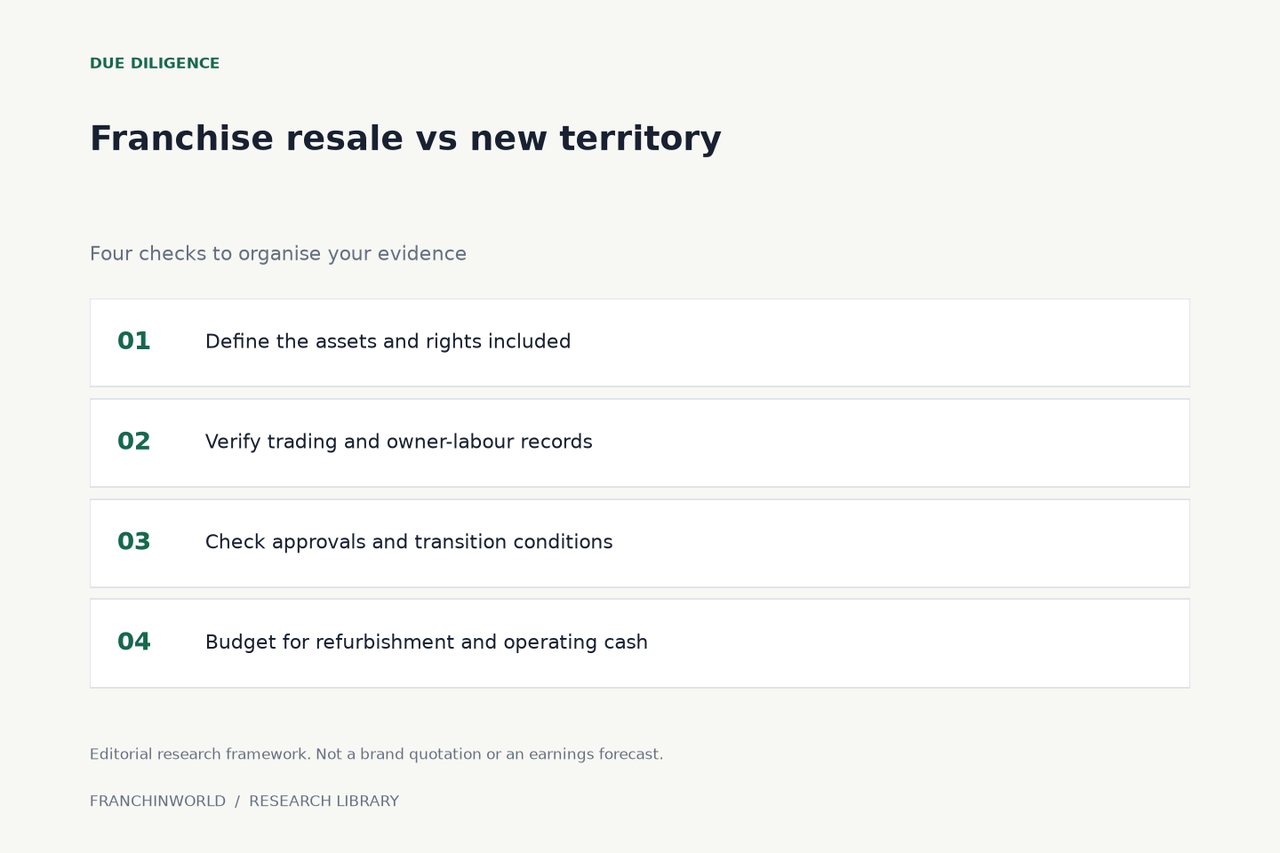
Compare an existing franchise purchase with opening a new territory using different evidence tests.
Due diligence
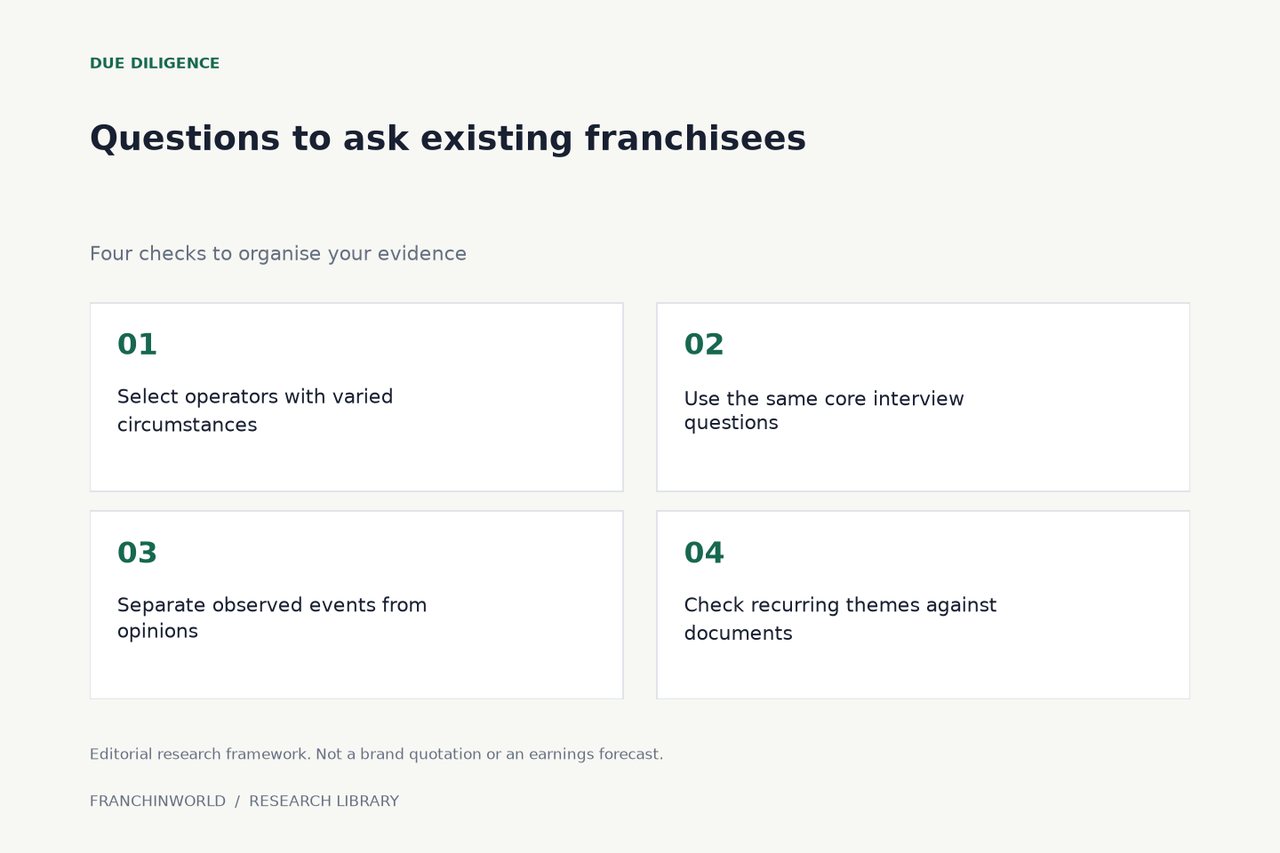
Use consistent operator interviews to test training, support, workload and opening assumptions.
Due diligence
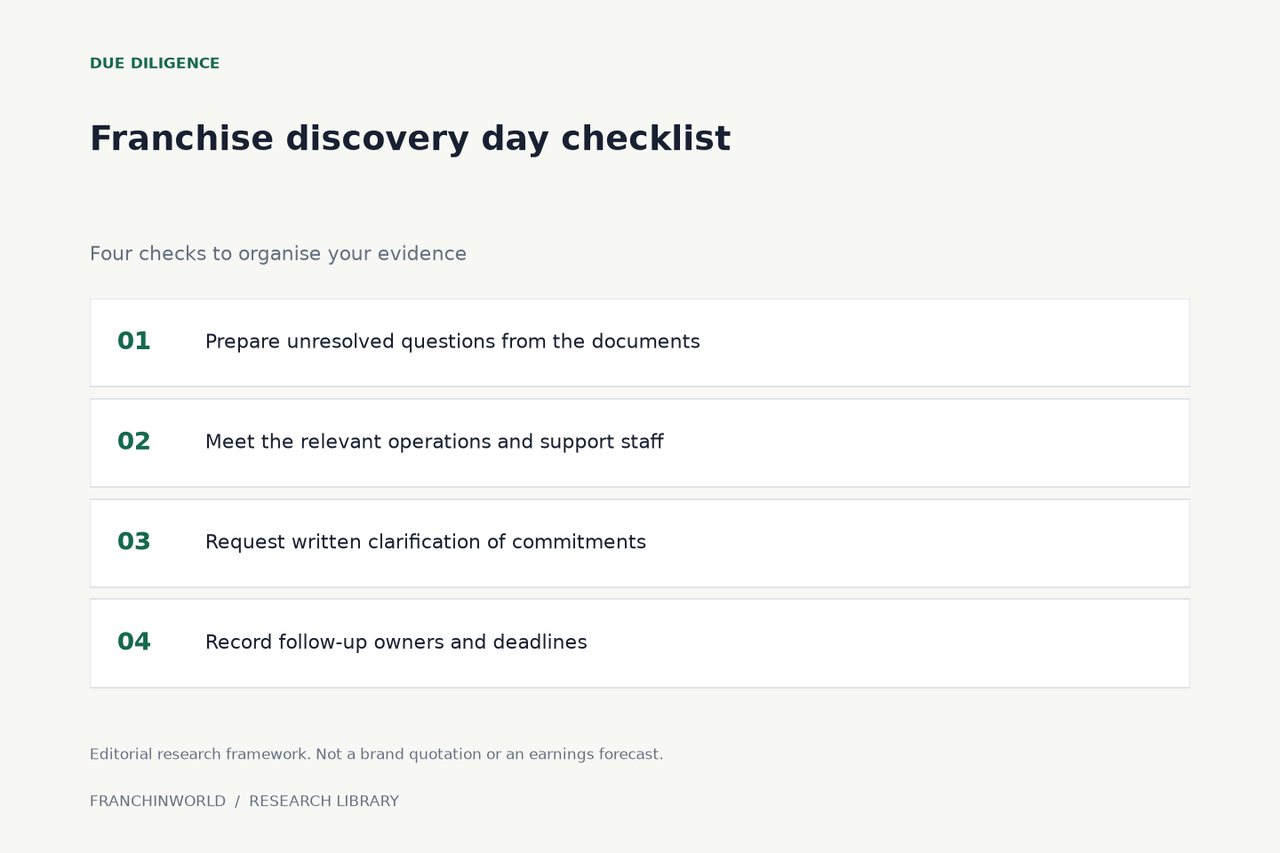
Prepare for a franchise discovery meeting and turn presentations into a documented follow-up list.
Due diligence
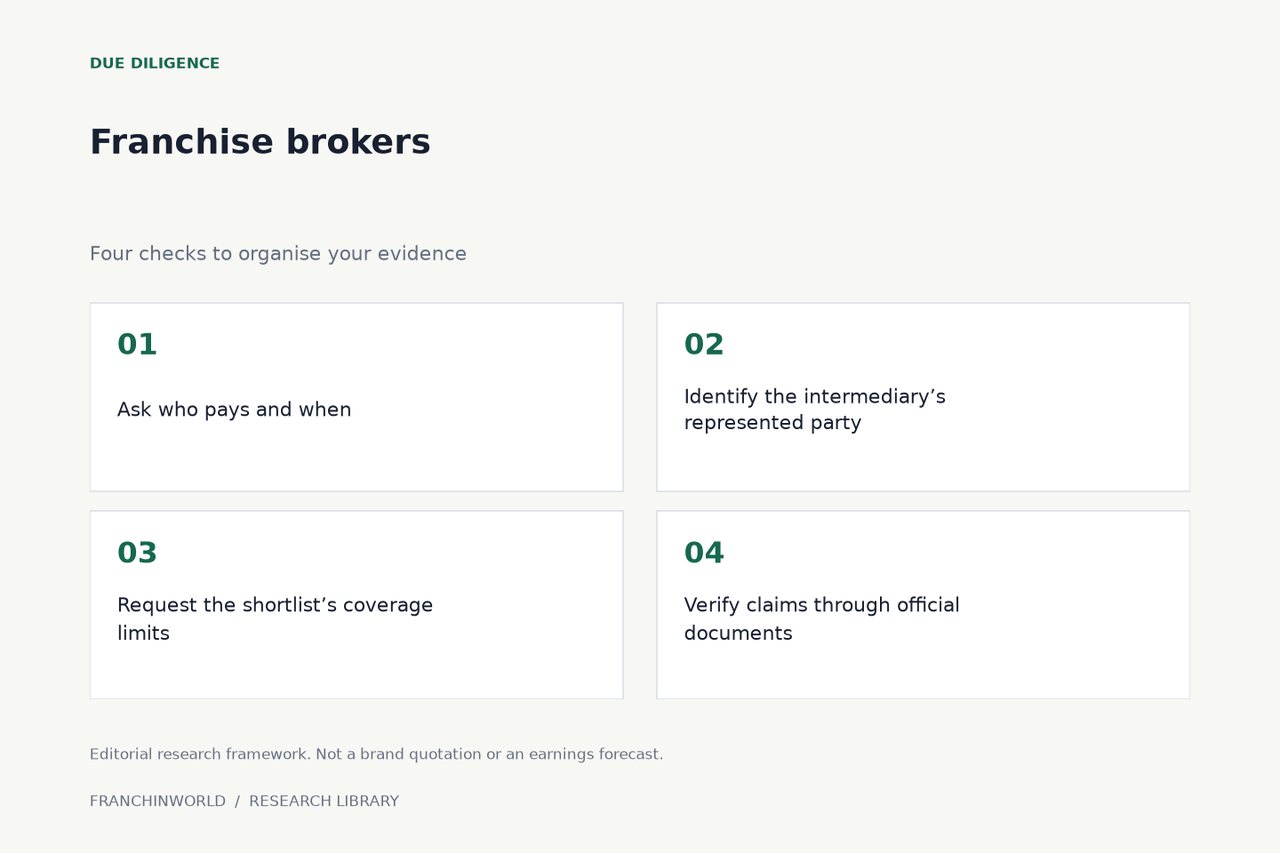
Understand how a franchise intermediary is paid and which opportunities their search actually covers.
Due diligence
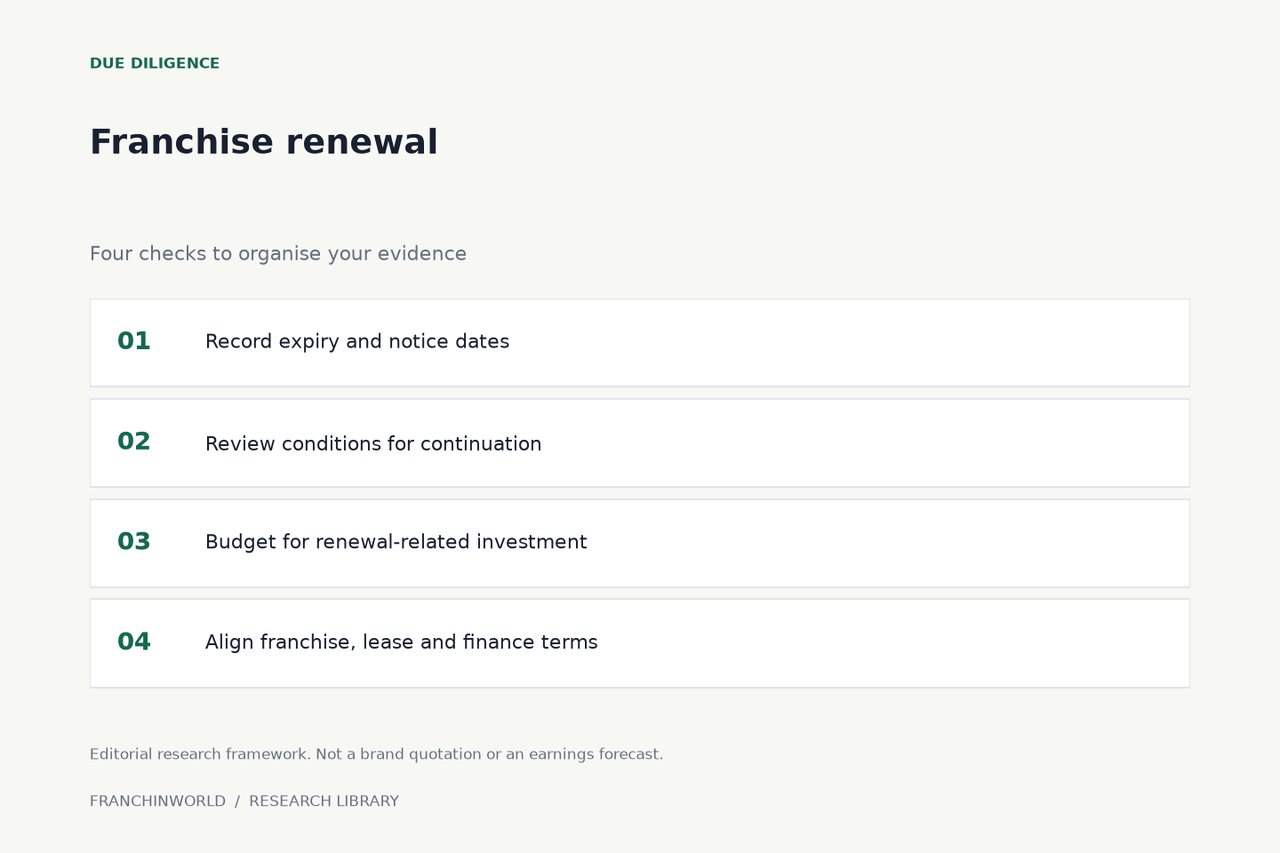
Examine franchise renewal separately from your assumptions about running the business indefinitely.
Due diligence
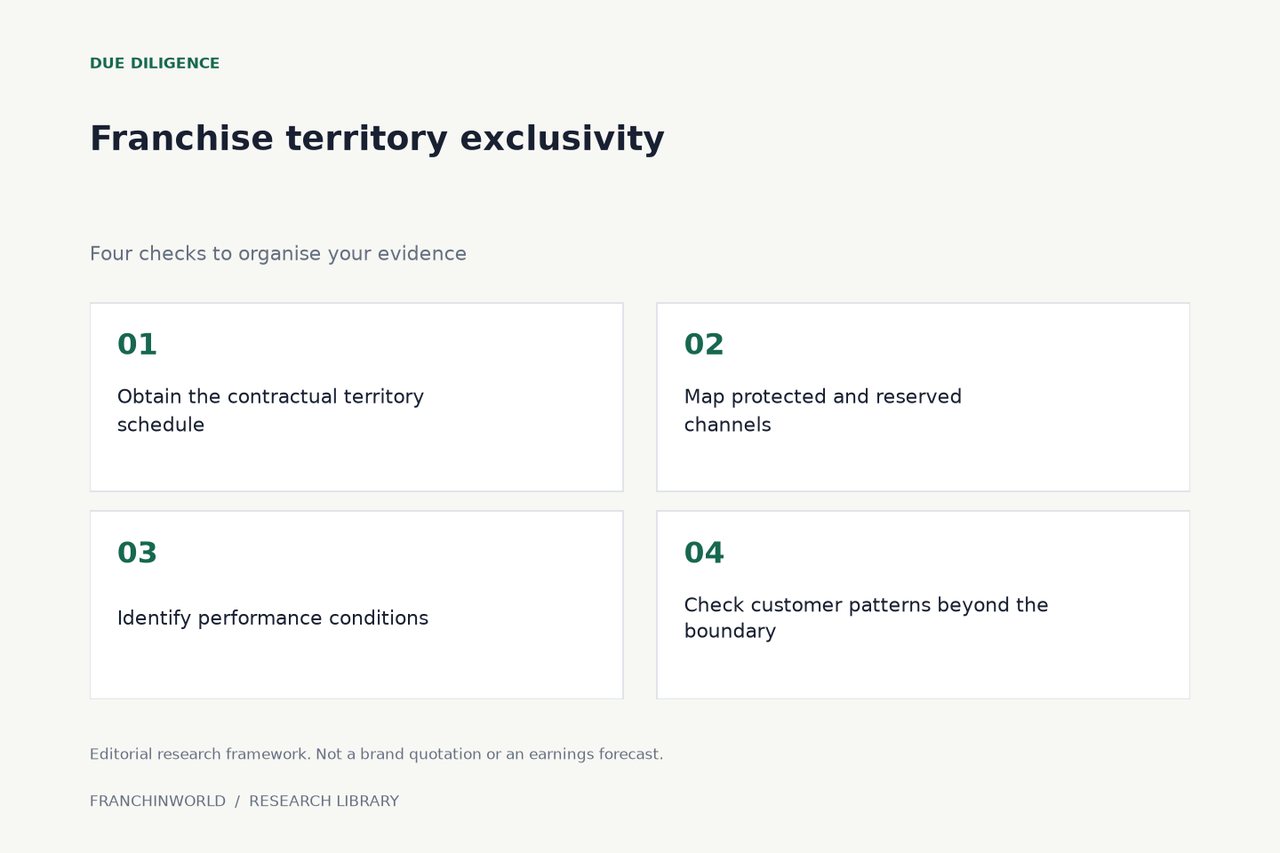
Check which customers, channels and locations a franchise territory actually protects.
Due diligence
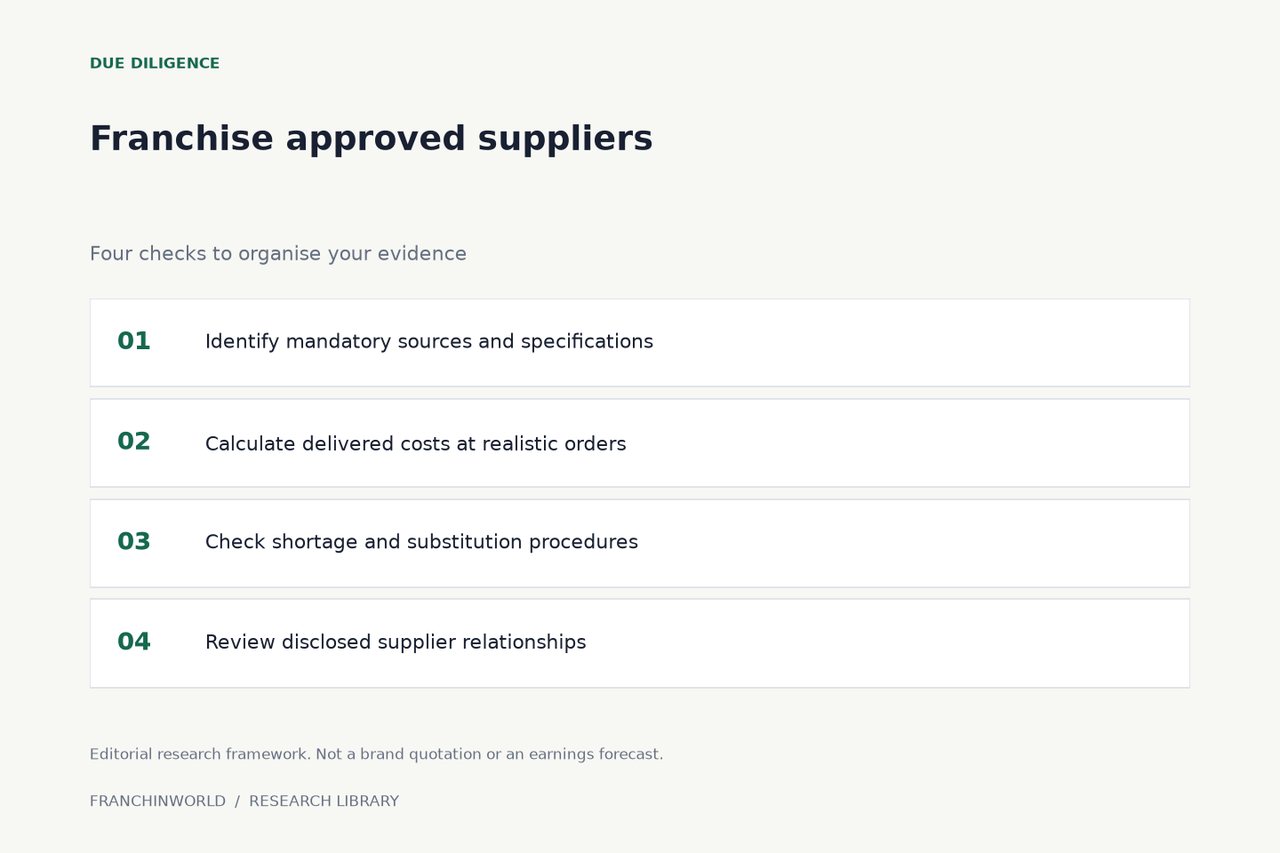
Review supplier restrictions, delivery terms and substitution procedures before modelling margins.
Due diligence
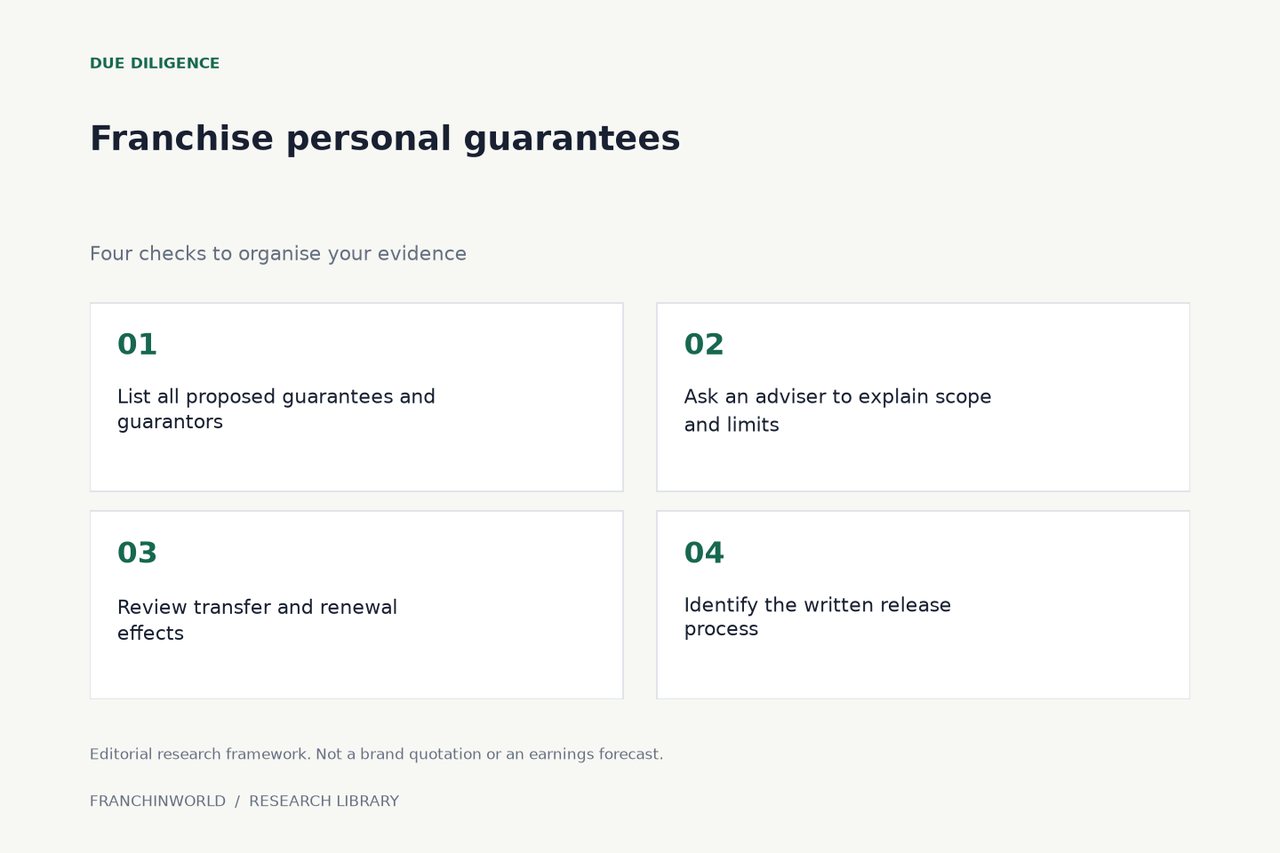
Map personal commitments across franchise, premises and finance documents before signing.
Due diligence
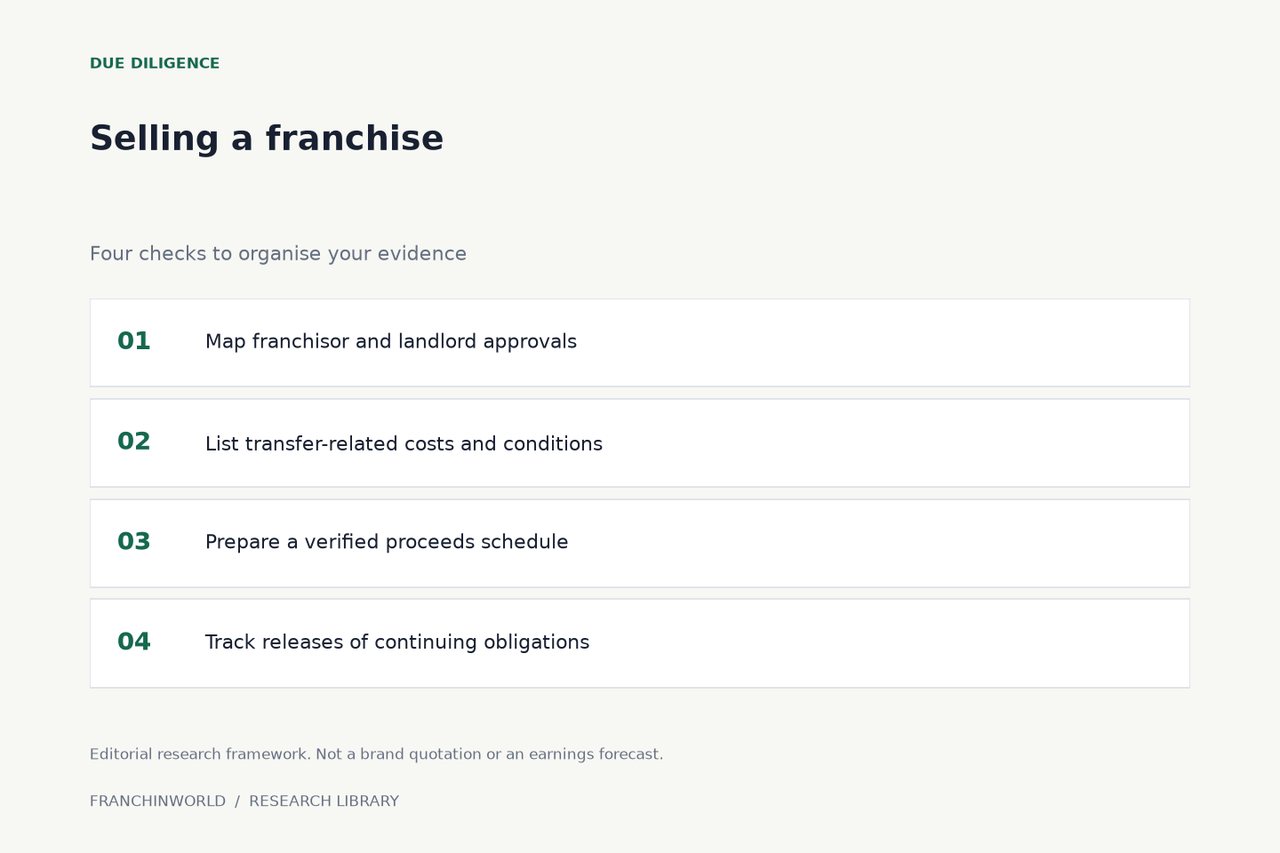
Prepare an exit register covering approvals, liabilities and commitments that may survive a sale.
Due diligence
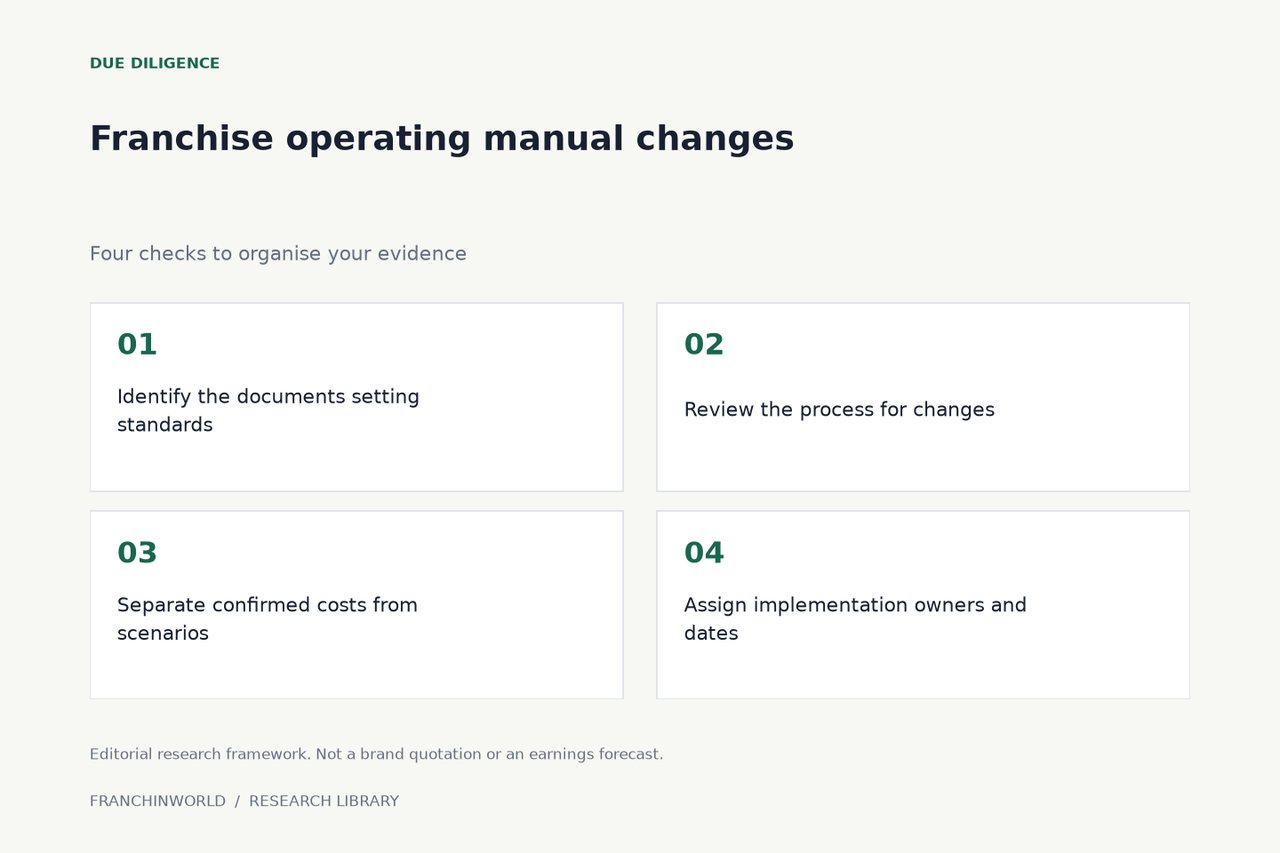
Check how operating standards can change and how new requirements enter your investment plan.
Read specific US FDD sections with focused worksheets. These guides do not replace the current document or legal advice.
US franchise disclosure
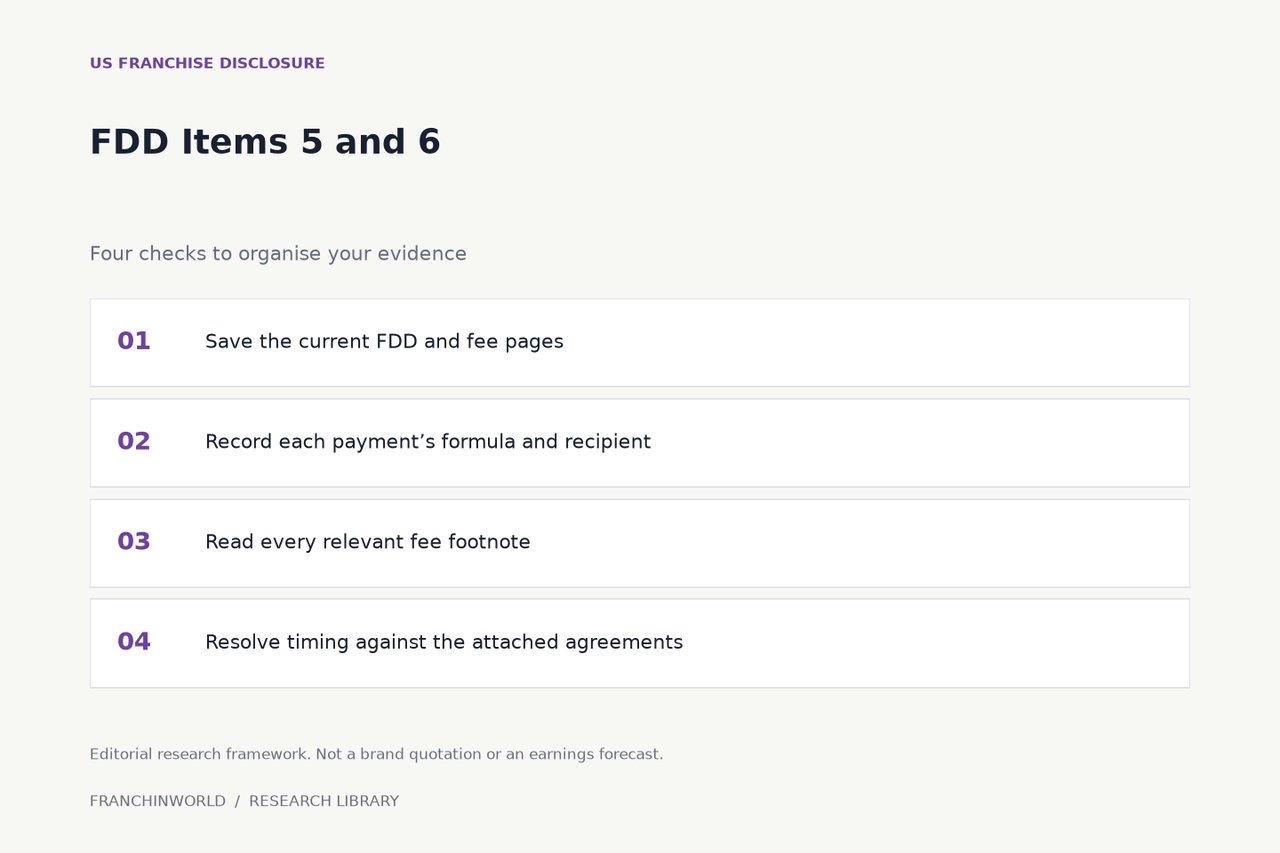
Read initial and continuing fee disclosures together and connect them to payment timing.
US franchise disclosure
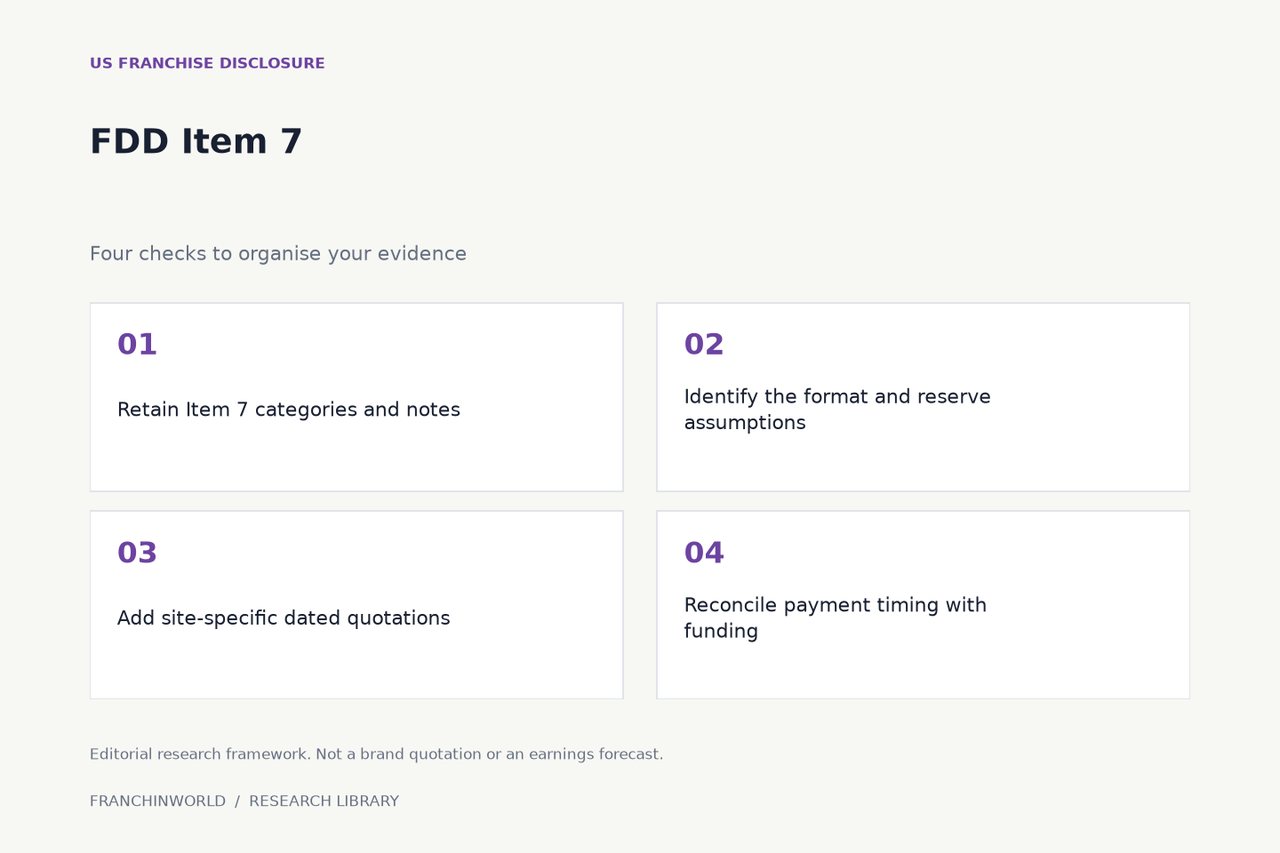
Use a US franchise initial-investment disclosure without mistaking its range for a site quotation.
US franchise disclosure
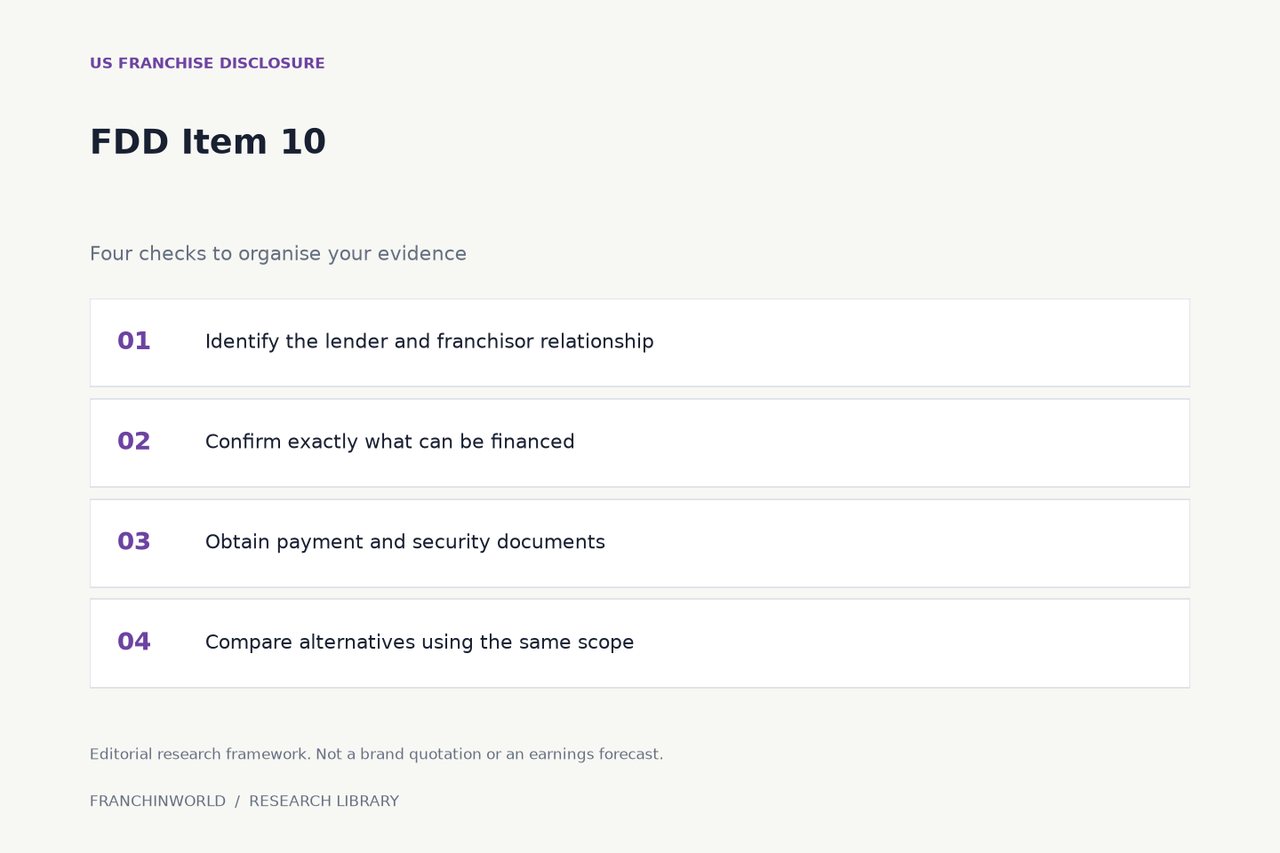
Connect disclosed financing arrangements to lender documents, cash payments and security questions.
US franchise disclosure
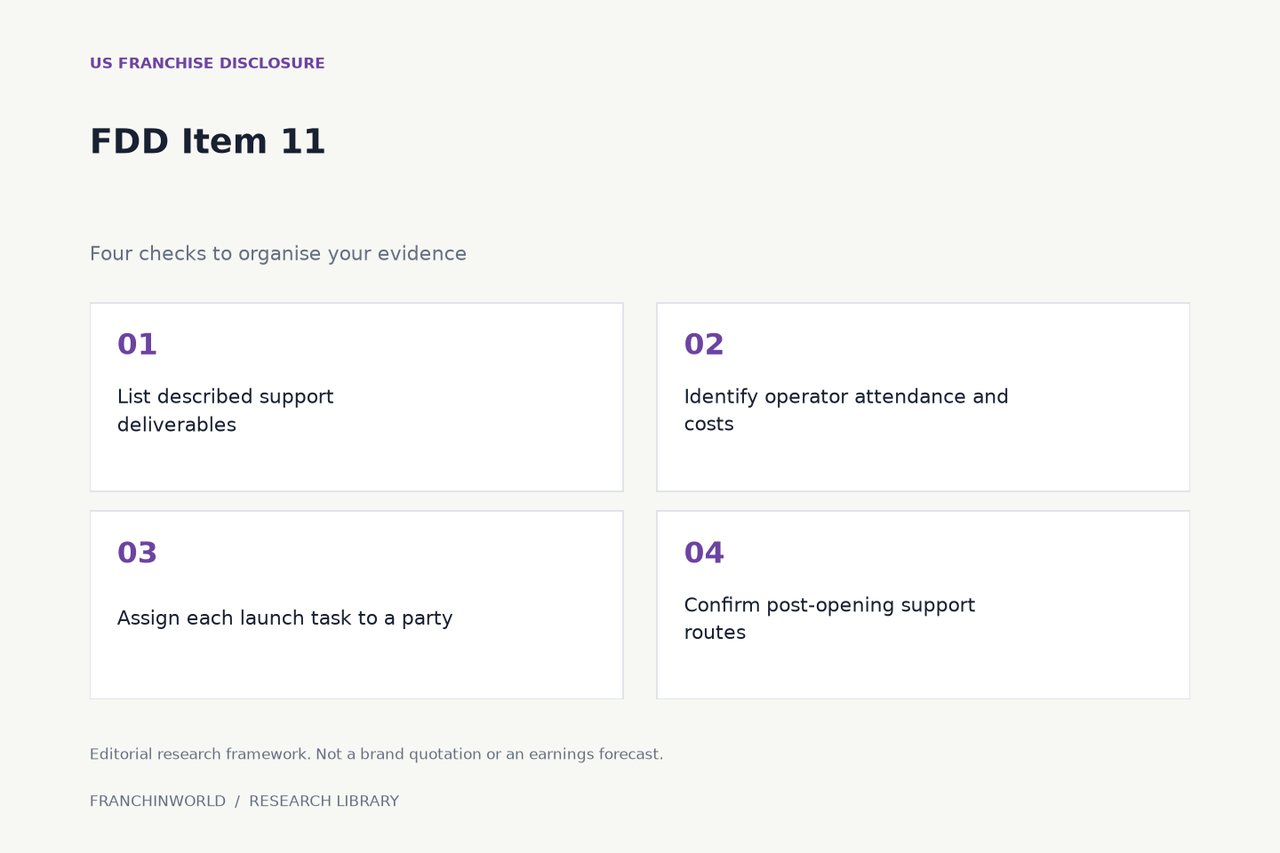
Turn US franchise support disclosures into a responsibility and launch-readiness checklist.
US franchise disclosure
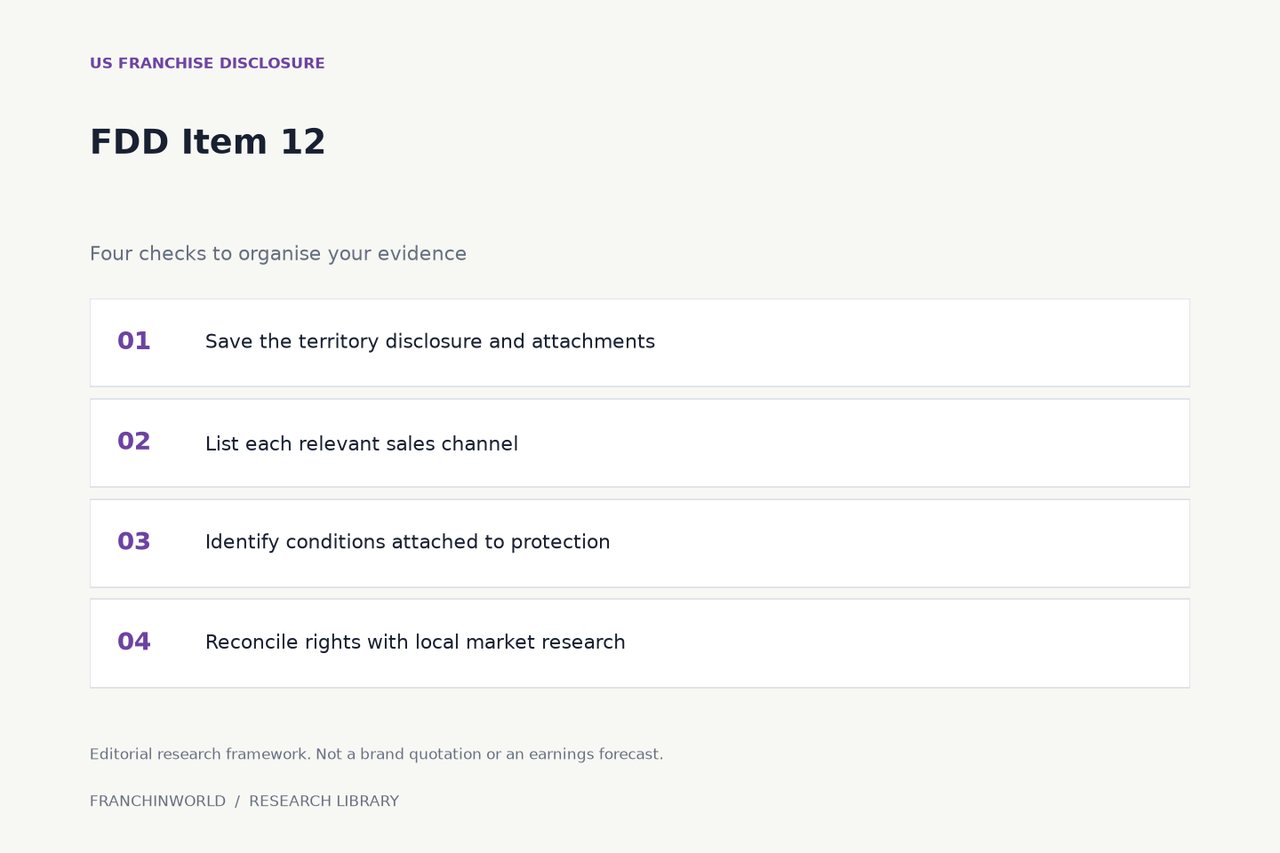
Use Item 12 to identify territorial rights, conditions and unresolved channel questions in a US offer.
US franchise disclosure
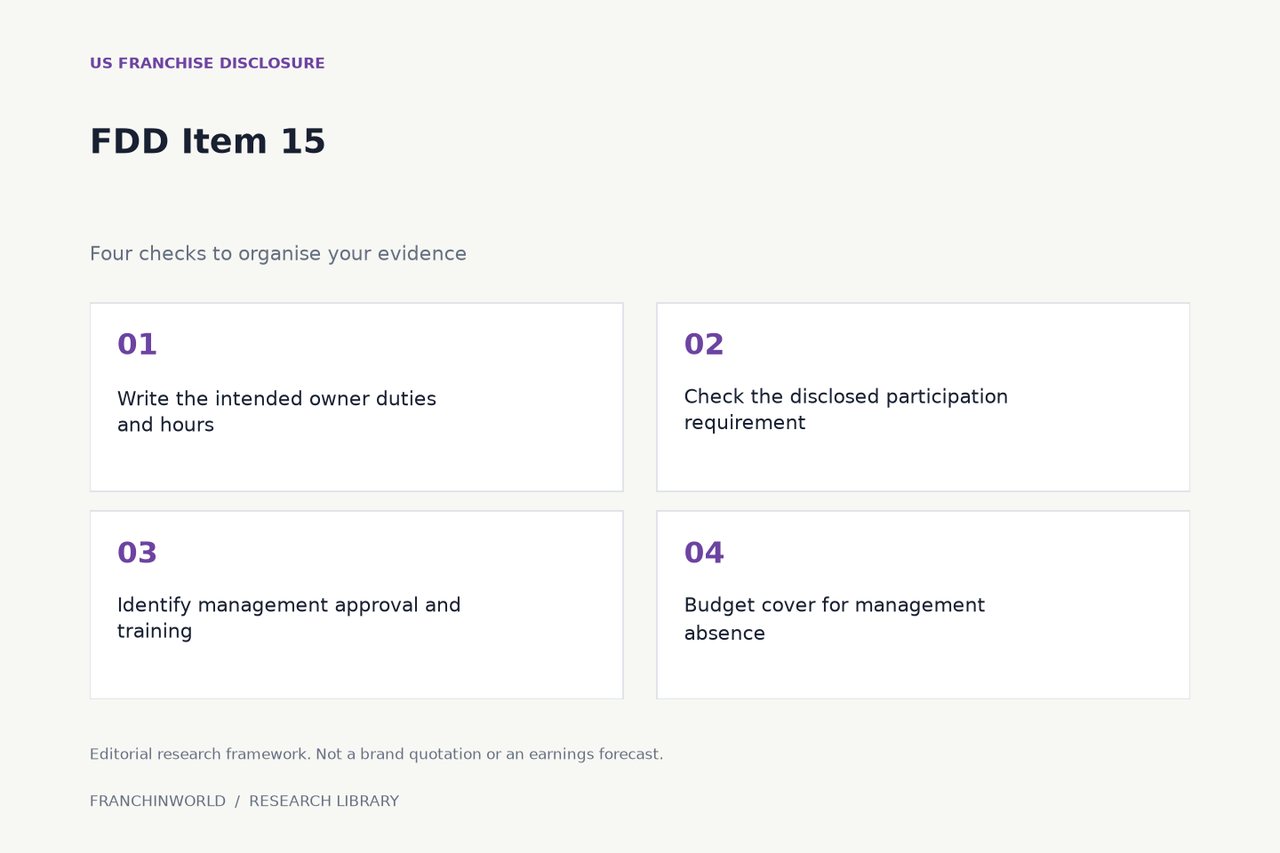
Check the operating role required by a US franchise before assuming absentee ownership.
US franchise disclosure
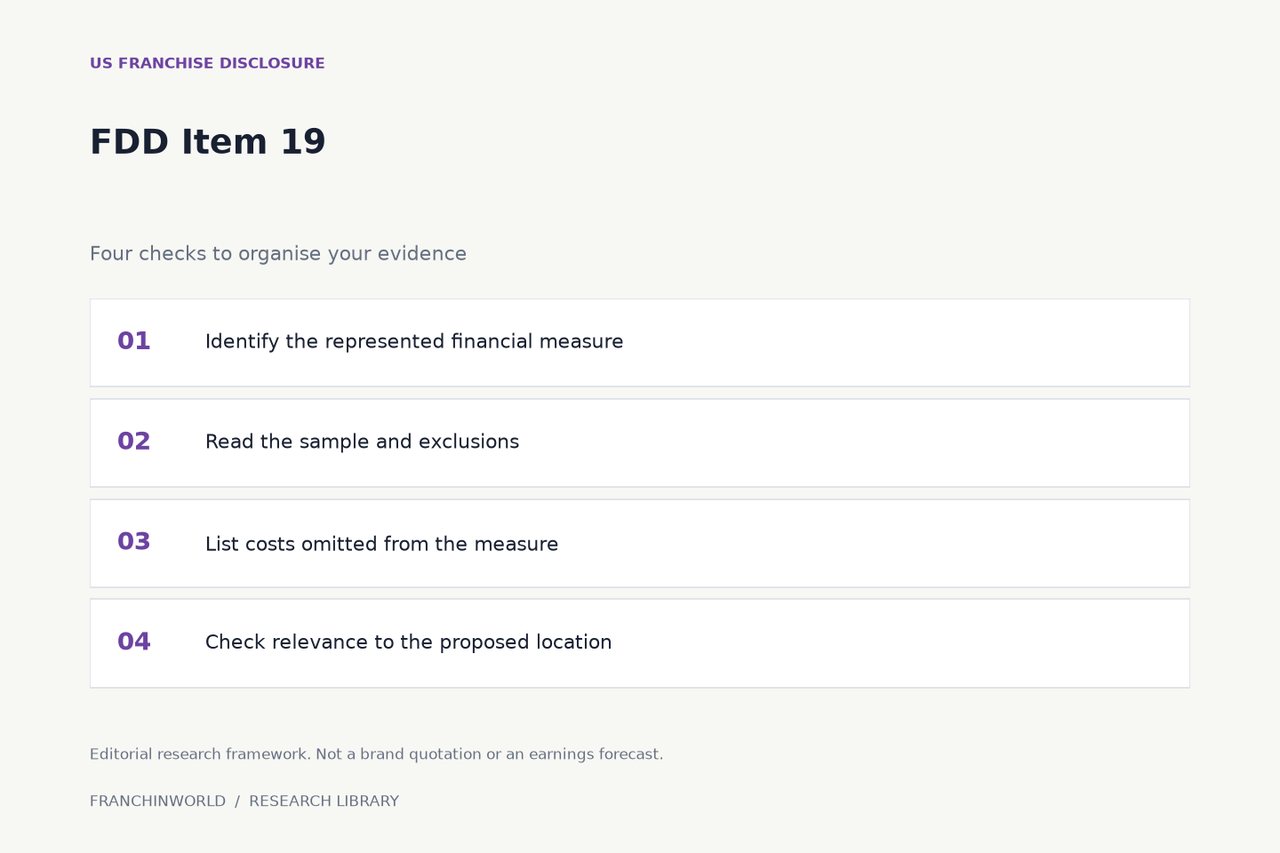
Check the sample, measure and missing costs behind a US franchise financial performance representation.
US franchise disclosure
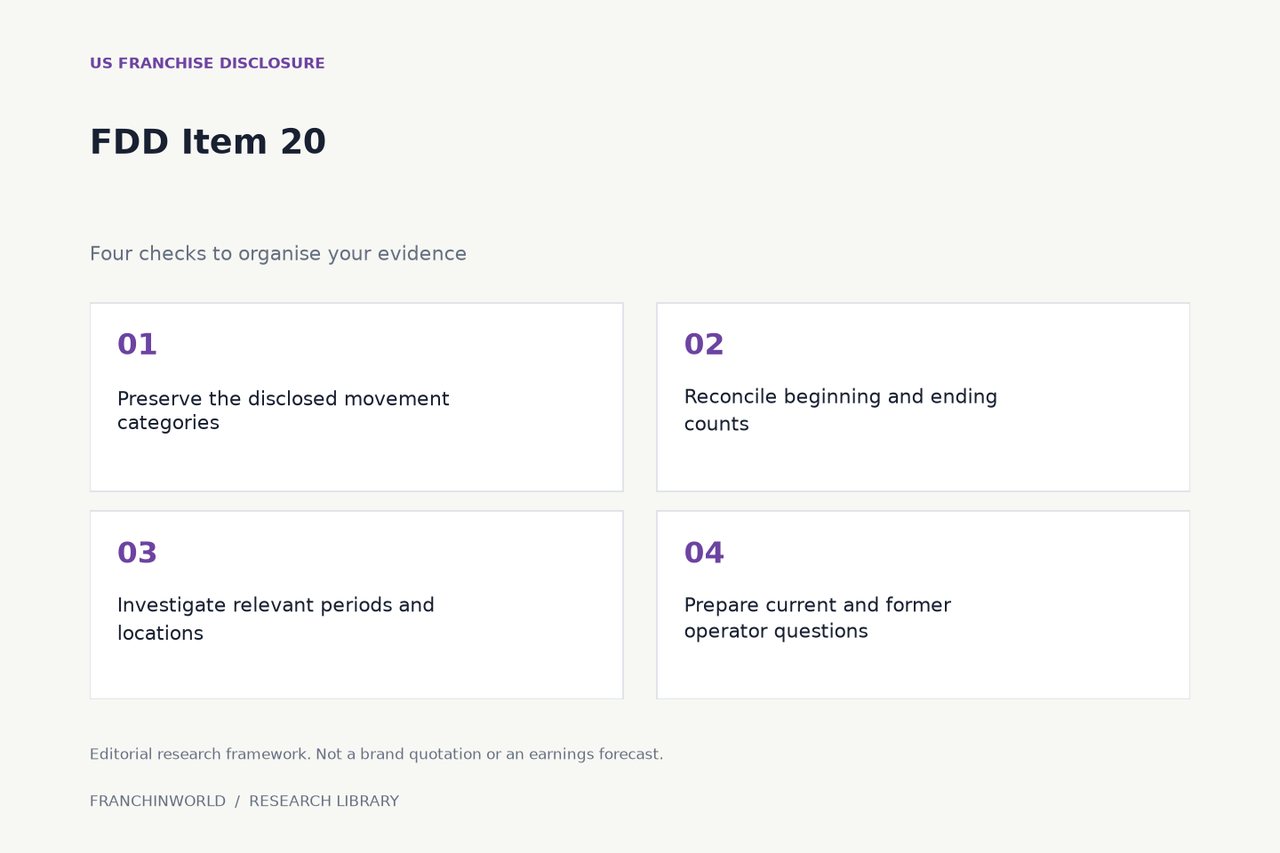
Read outlet movements and franchisee contacts without inventing a franchise failure rate.
US franchise disclosure
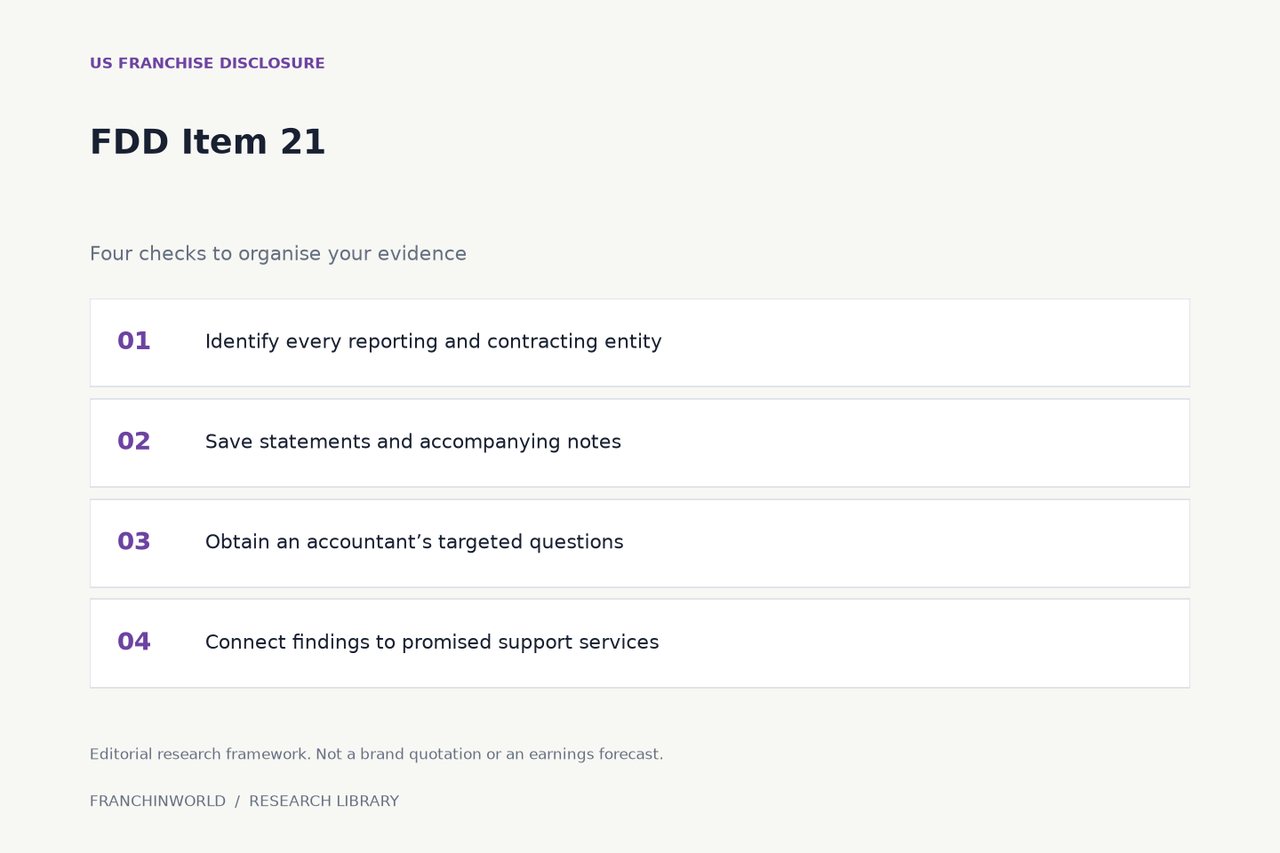
Prepare an accountant’s review of the franchisor’s financial position and support capacity.
US franchise disclosure
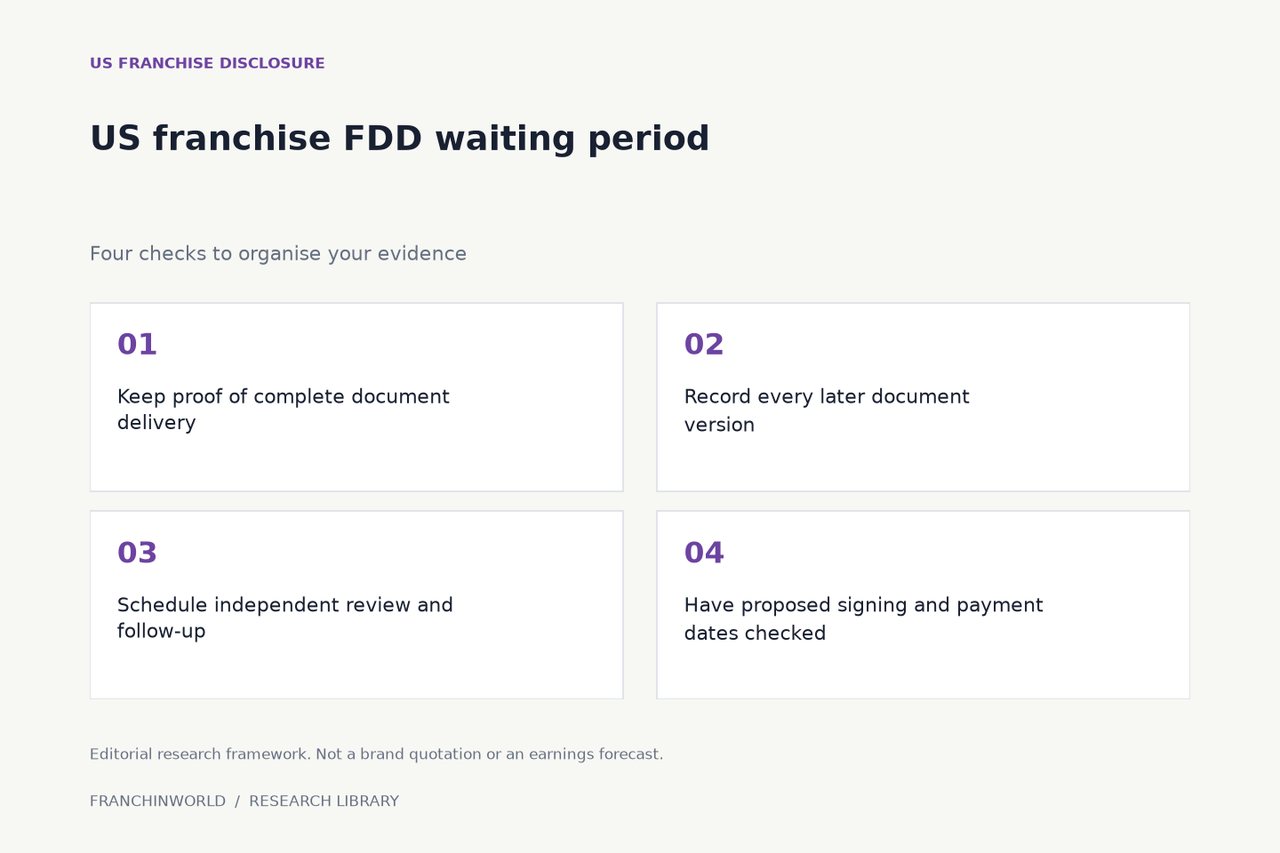
Understand the federal 14-calendar-day disclosure baseline and preserve time for actual document review.
Turn a proposed operating model into site, staffing, capacity and continuity questions.
Launch & operations
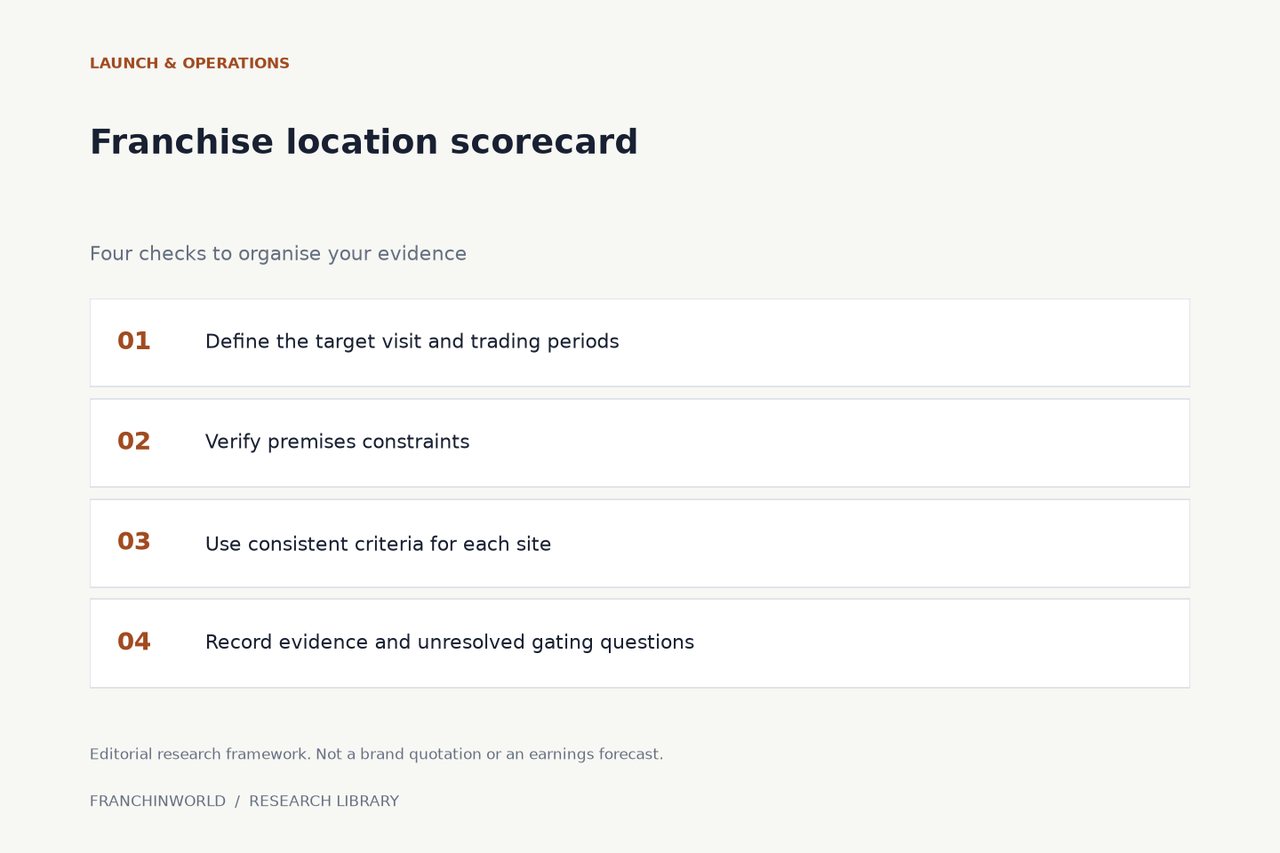
Compare candidate franchise locations using evidence, operating constraints and clearly stated assumptions.
Launch & operations
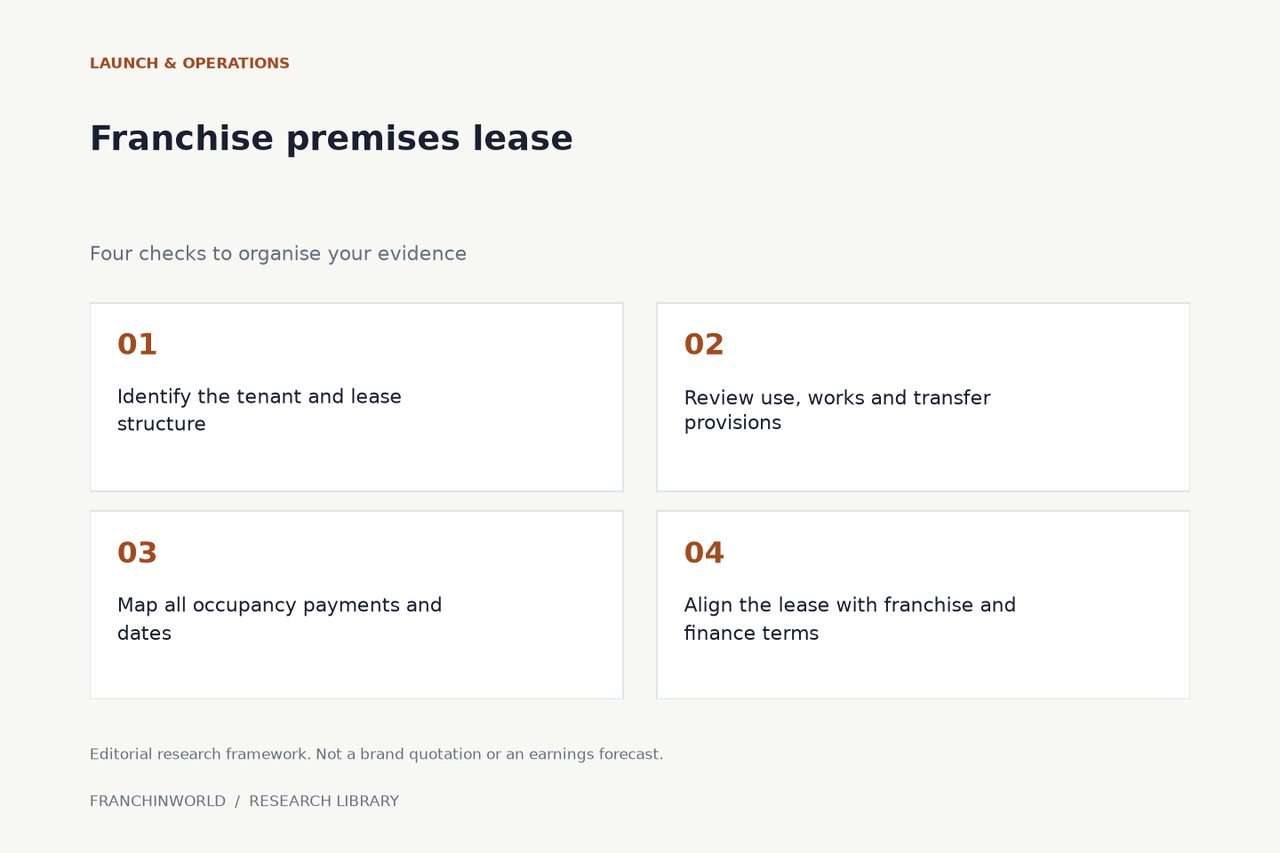
Align lease obligations with franchise approval, fit-out responsibilities and the operating plan.
Launch & operations
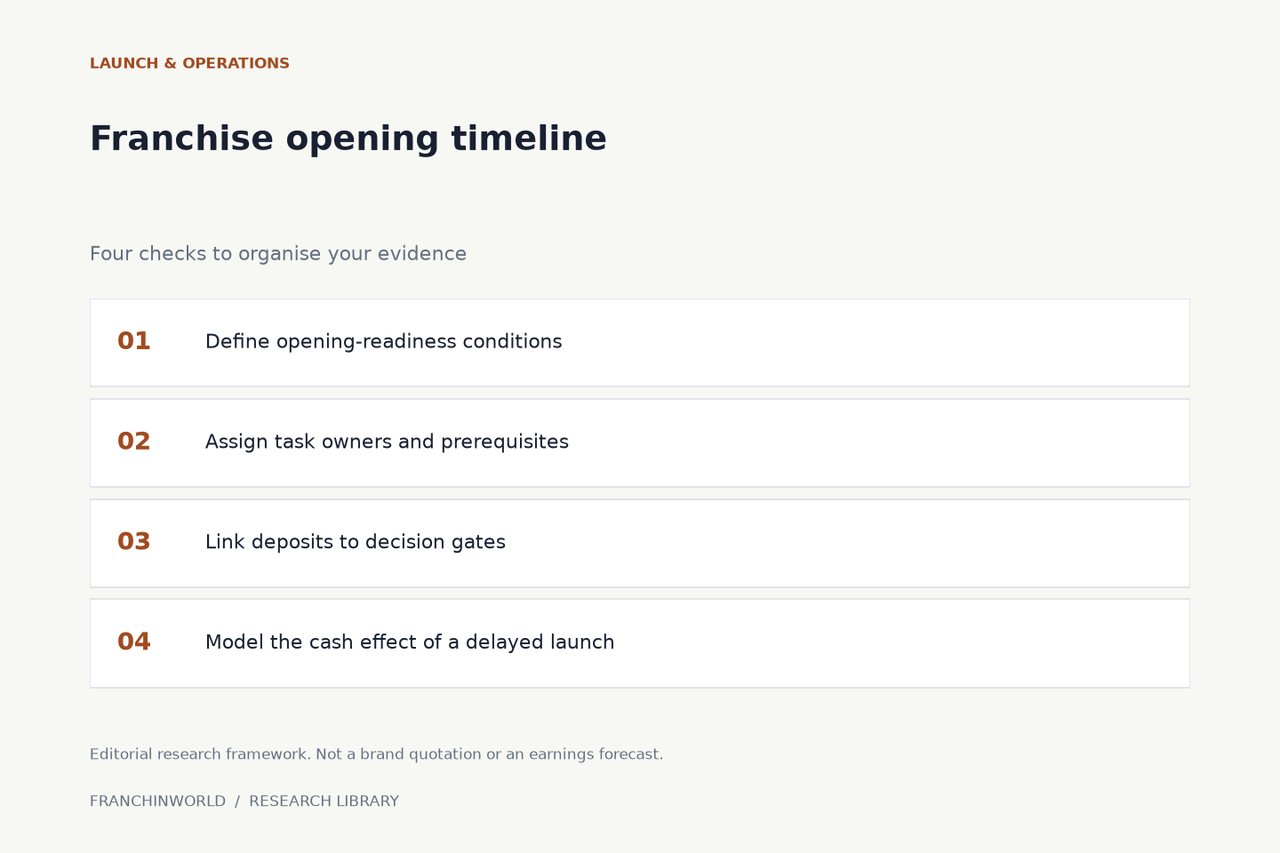
Plan a franchise launch around approvals, suppliers, staffing and cash commitments.
Launch & operations
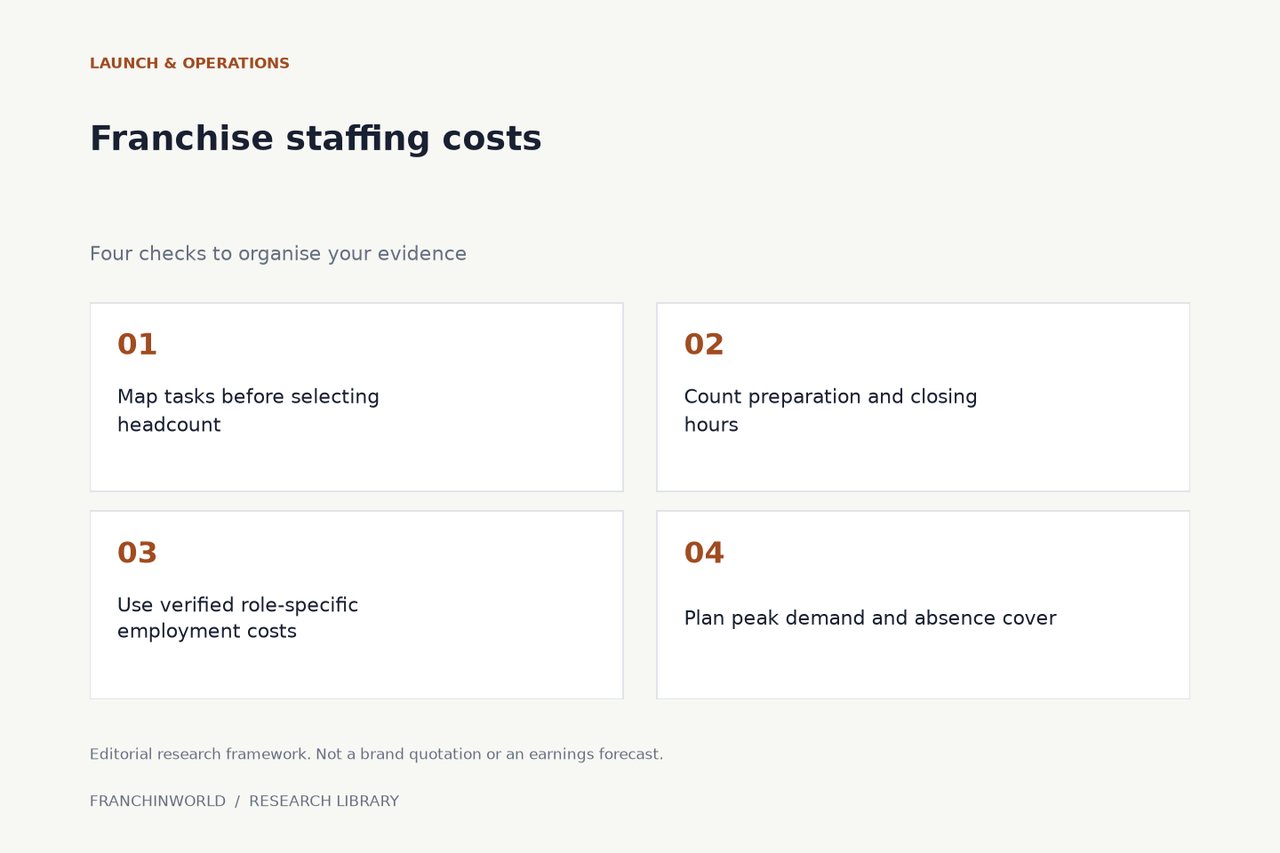
Translate opening hours and service tasks into staffing hours and a transparent cost scenario.
Launch & operations
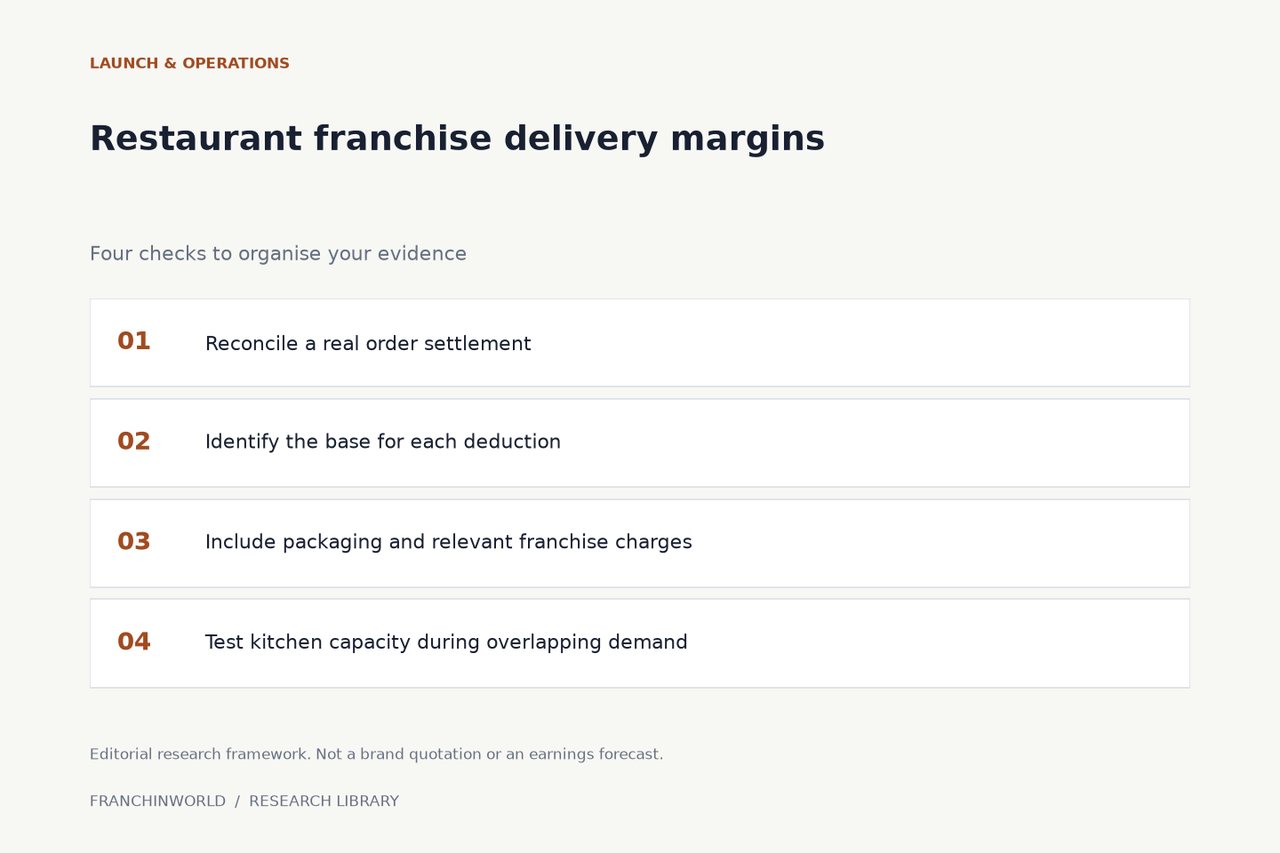
Compare delivery and in-store orders using contribution after channel-specific costs.
Launch & operations
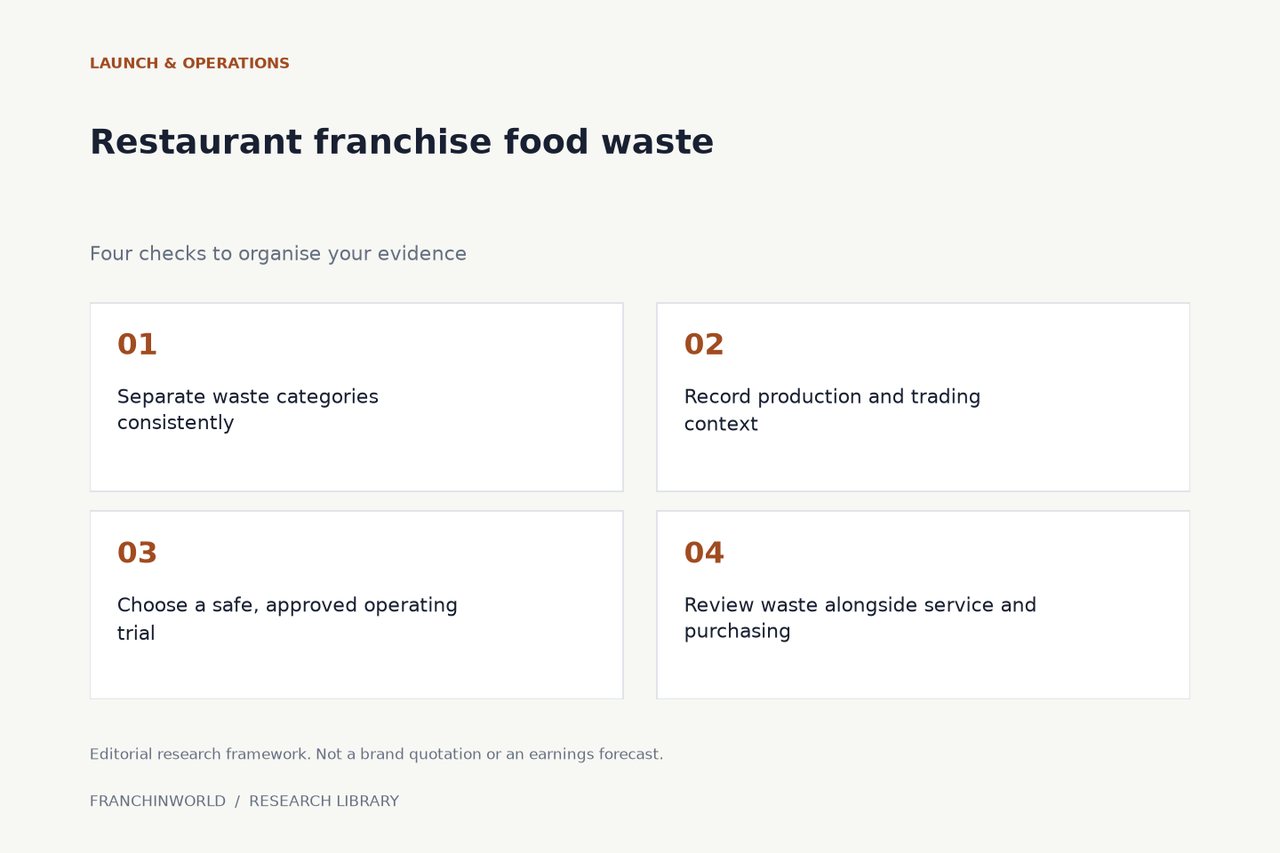
Create a practical waste log and test purchasing and production changes without compromising safety.
Launch & operations
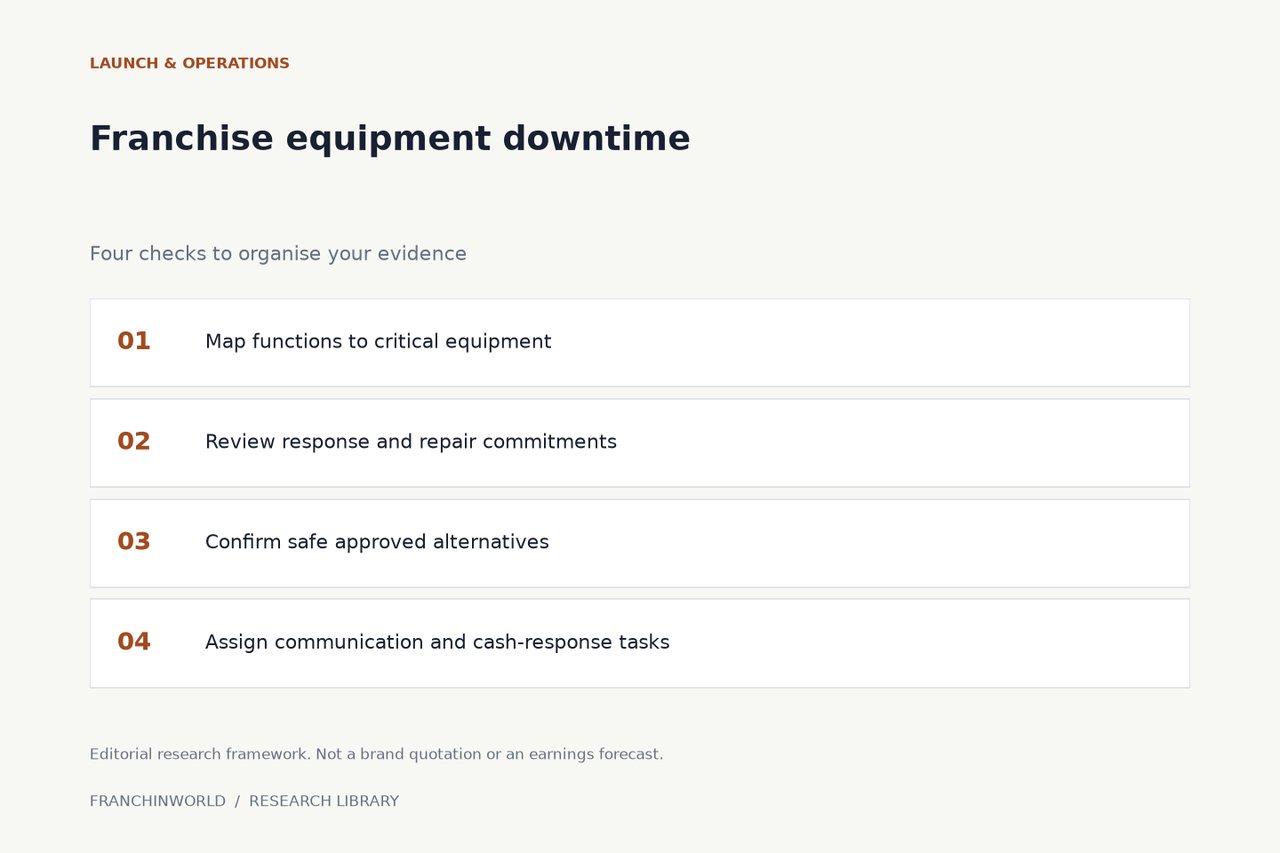
Map critical equipment, response routes and the cash effects of interrupted trading.
Launch & operations
Measure acquisition spending against completed paid work rather than raw enquiries.
Launch & operations
Model bookable hours, utilisation and cancellations for a service franchise.
Launch & operations
Test management, cash, permissions and shared operating capacity before expanding.
Compare the actual work, assets and customer relationships behind different franchise formats.
Business models
Evaluate a home-based franchise without assuming that no shop means no overhead or operating constraints.
Business models
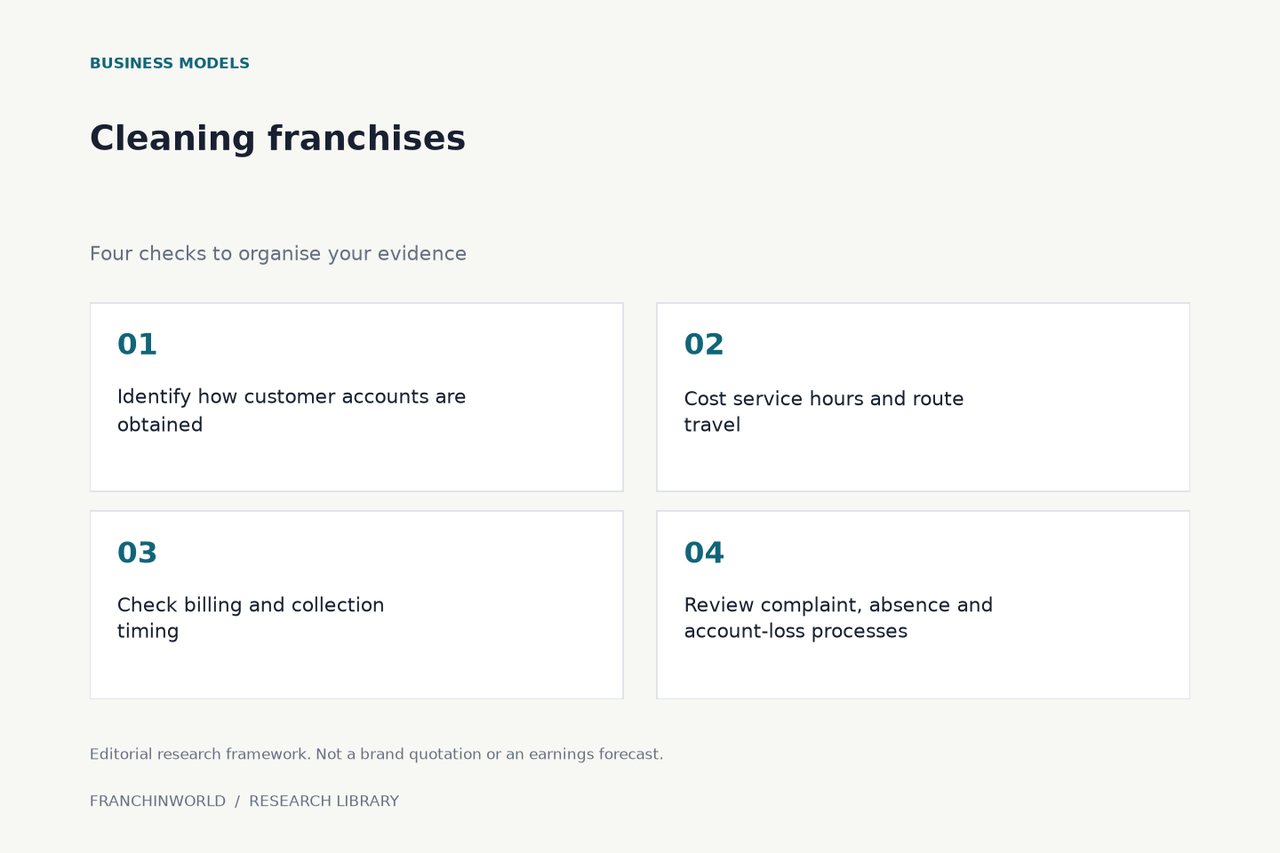
Compare a cleaning franchise’s promised support with customer acquisition, labour and payment requirements.
Business models
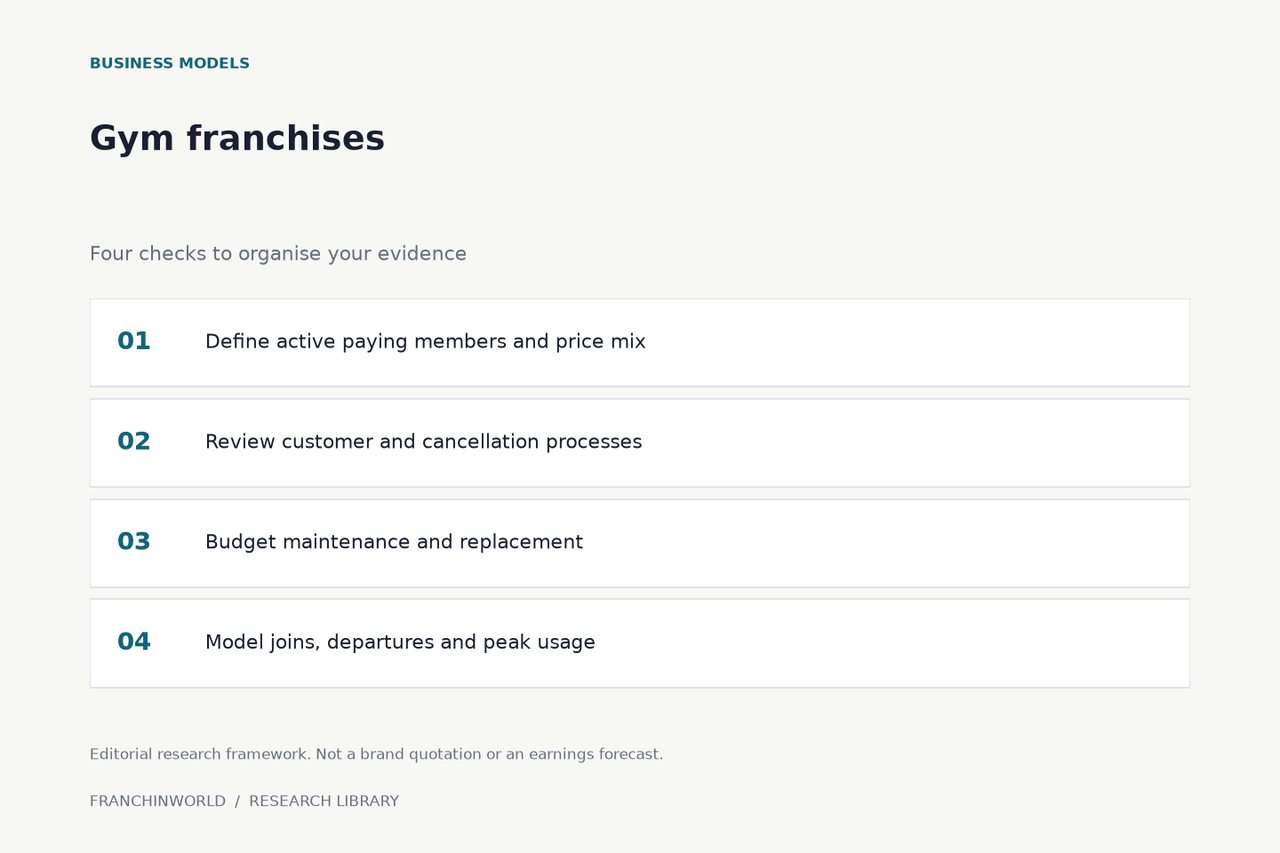
Review gym membership receipts, retention, staffing and equipment commitments before comparing offers.
Business models
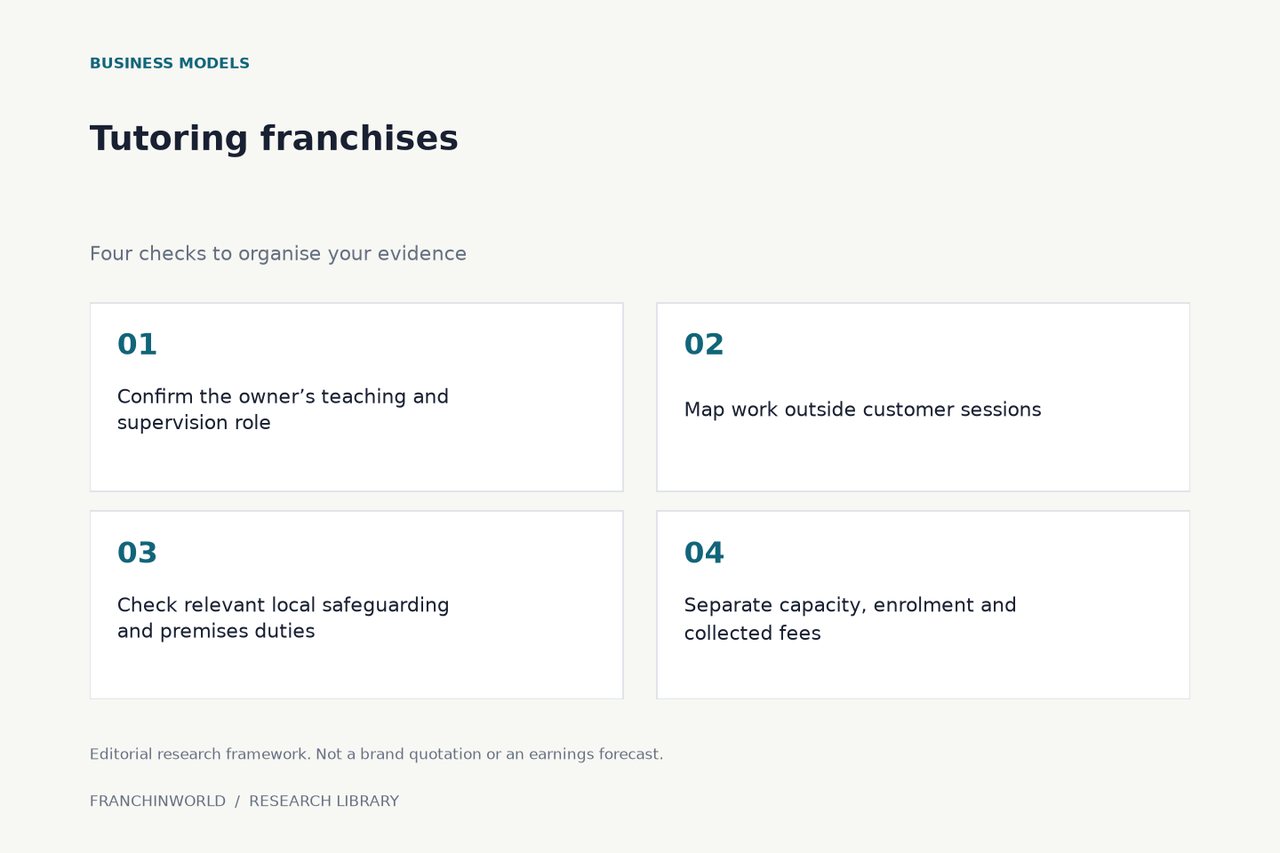
Compare education-franchise offers through teaching responsibility, enrolment and term-time workload.
Business models
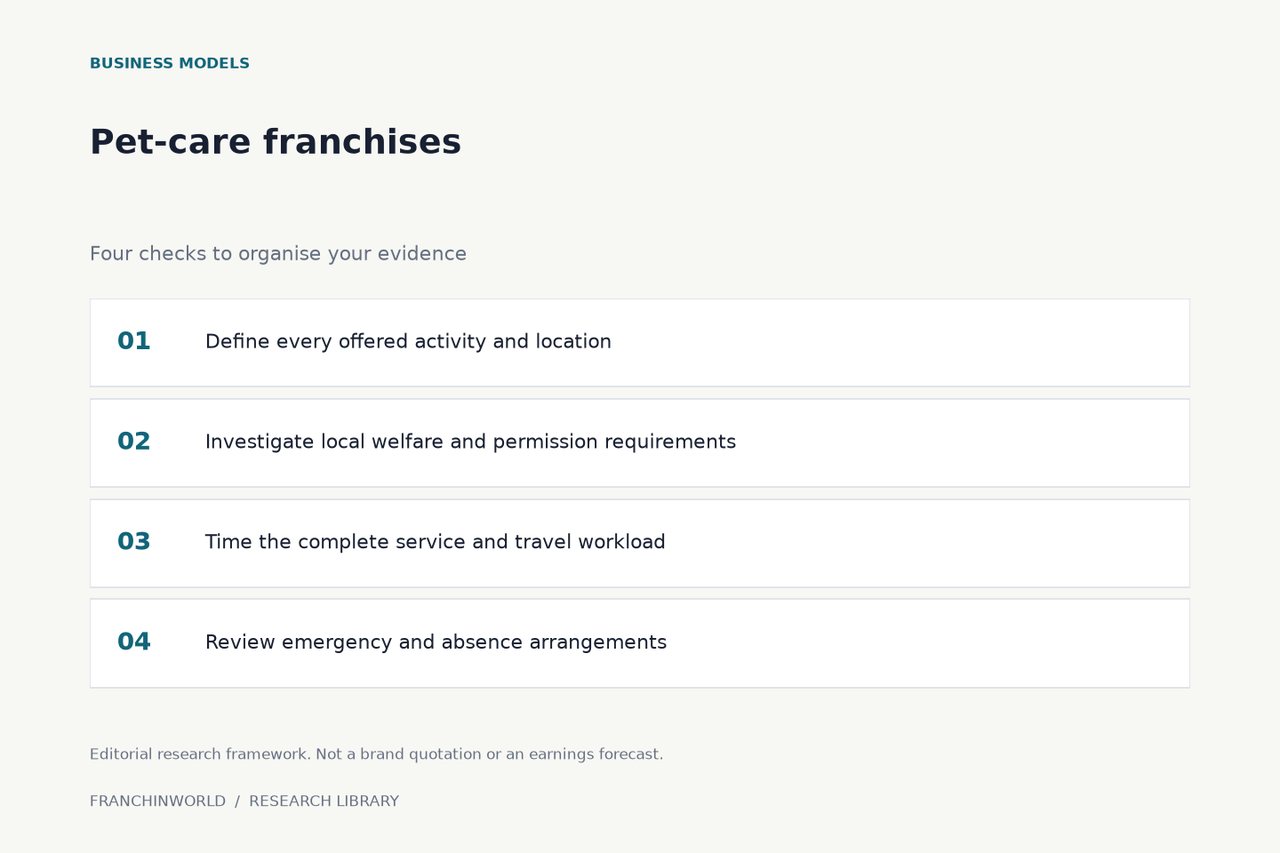
Evaluate pet-care service formats through capacity, travel, facilities and local requirements.
Business models
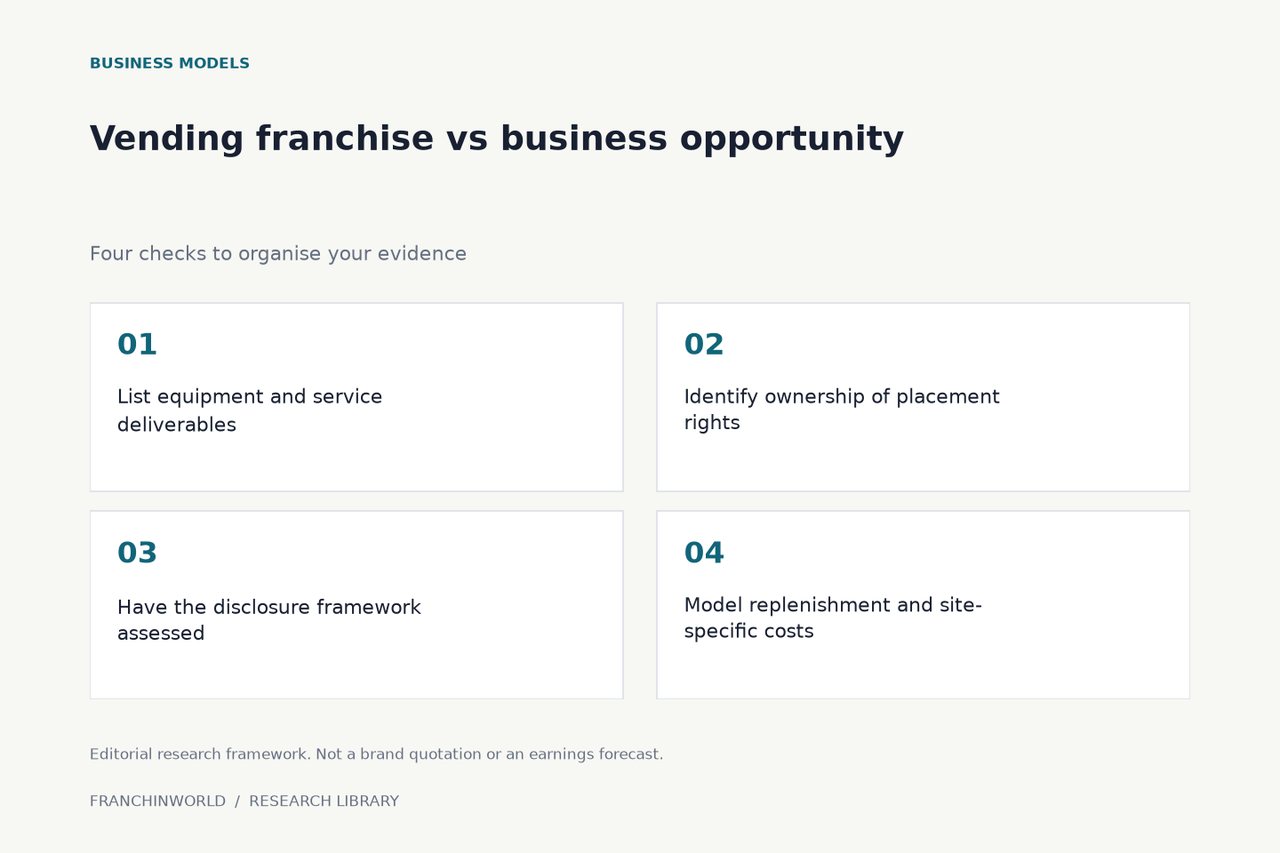
Separate equipment sales, placement promises and franchise rights in a vending proposal.
Business models
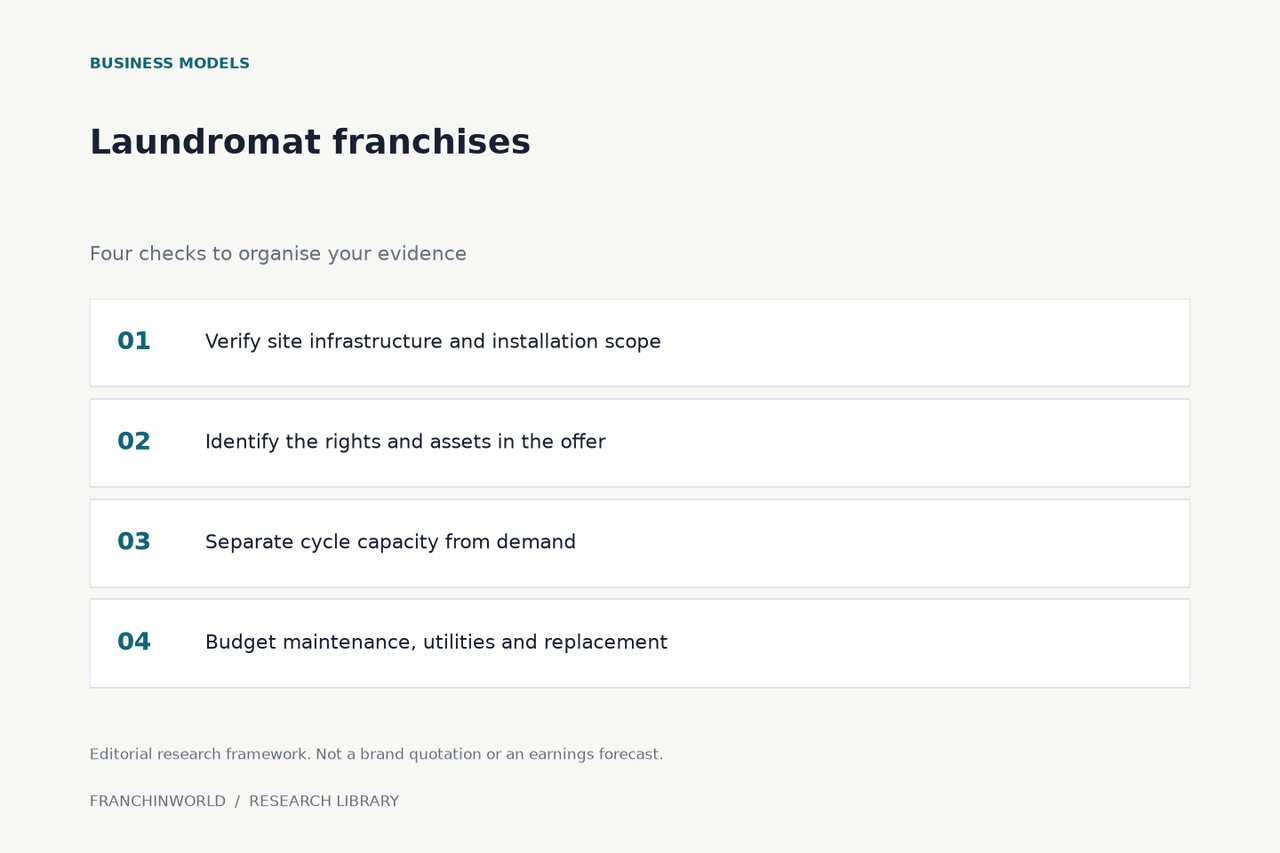
Assess laundry-franchise proposals through site infrastructure, machine use and continuing asset costs.
Business models
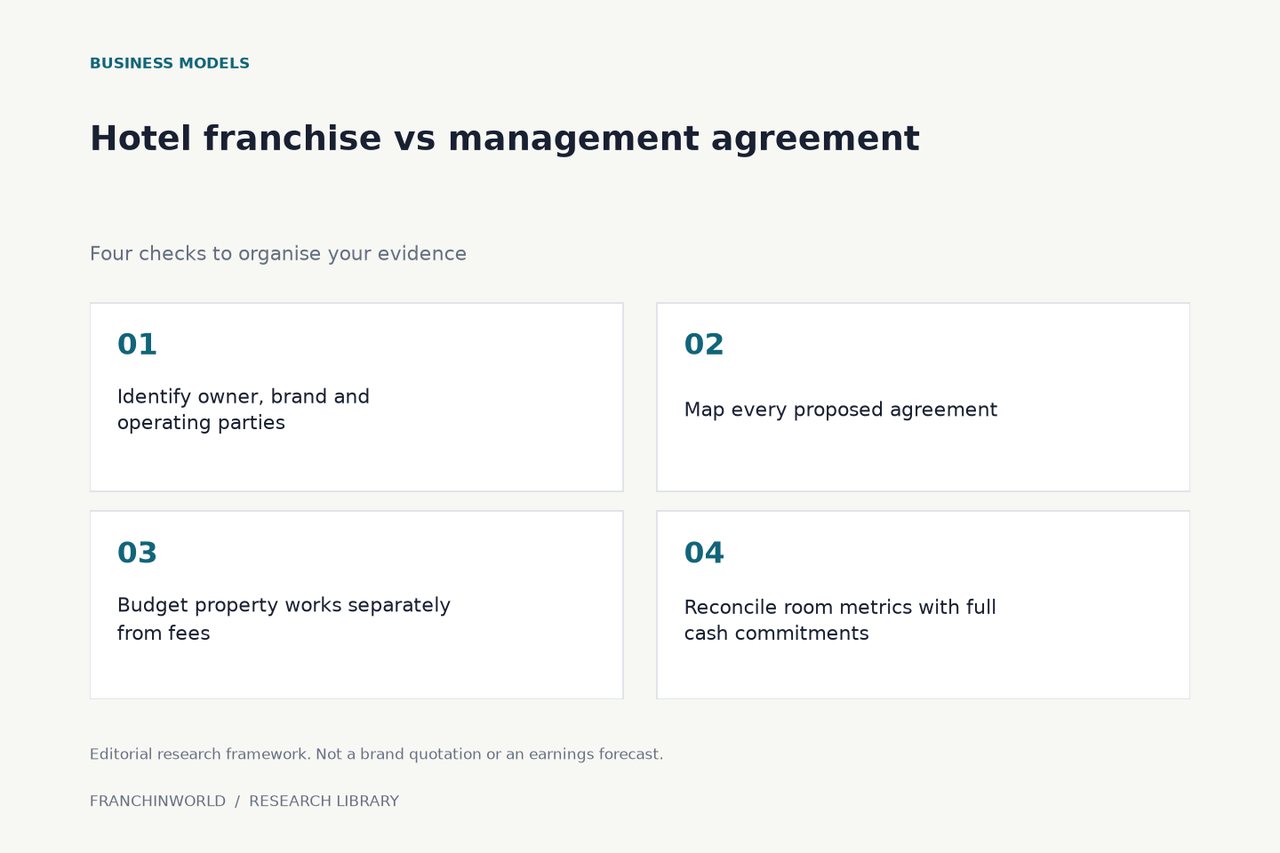
Distinguish brand rights, property ownership and hotel operating responsibility before comparing proposals.
Business models
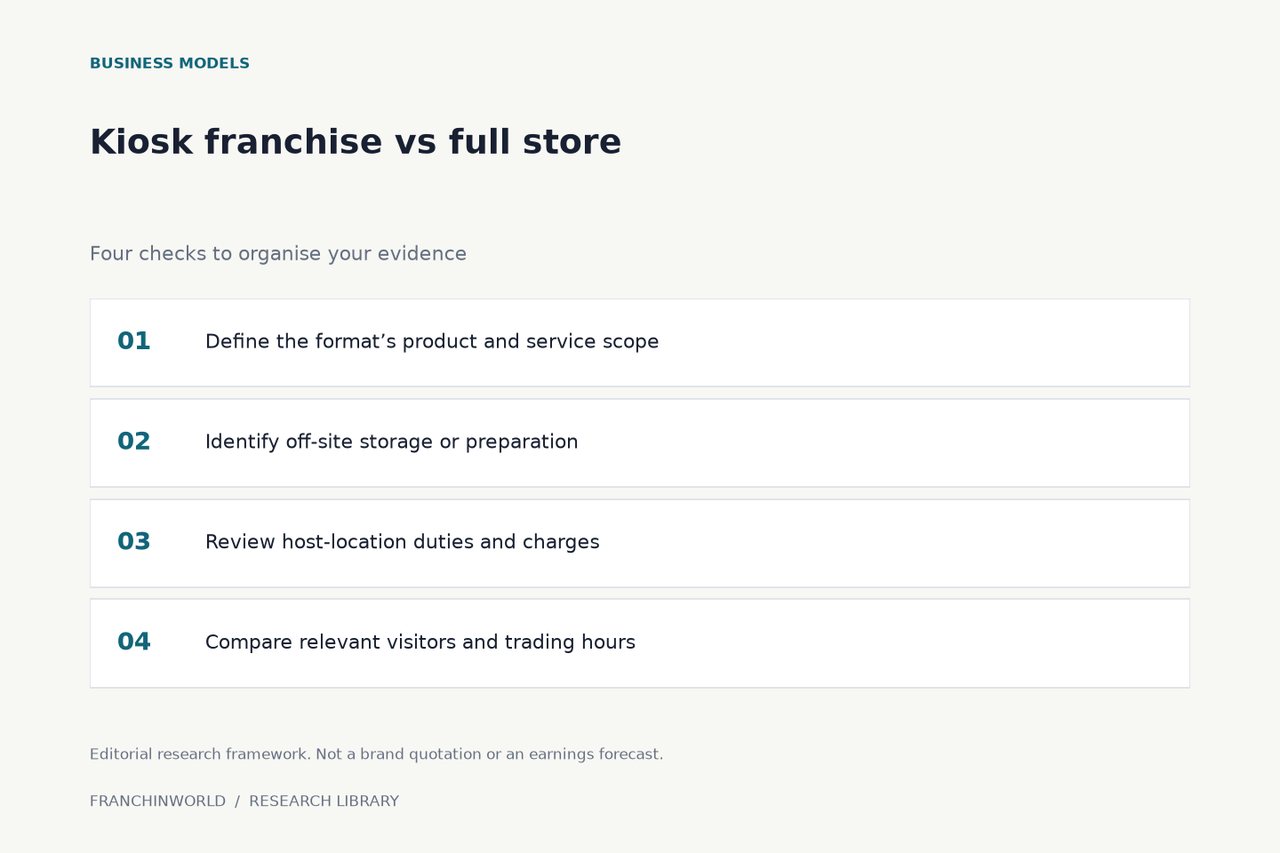
Compare kiosk and shop formats through menu, storage, landlord terms and total project scope.
Business models
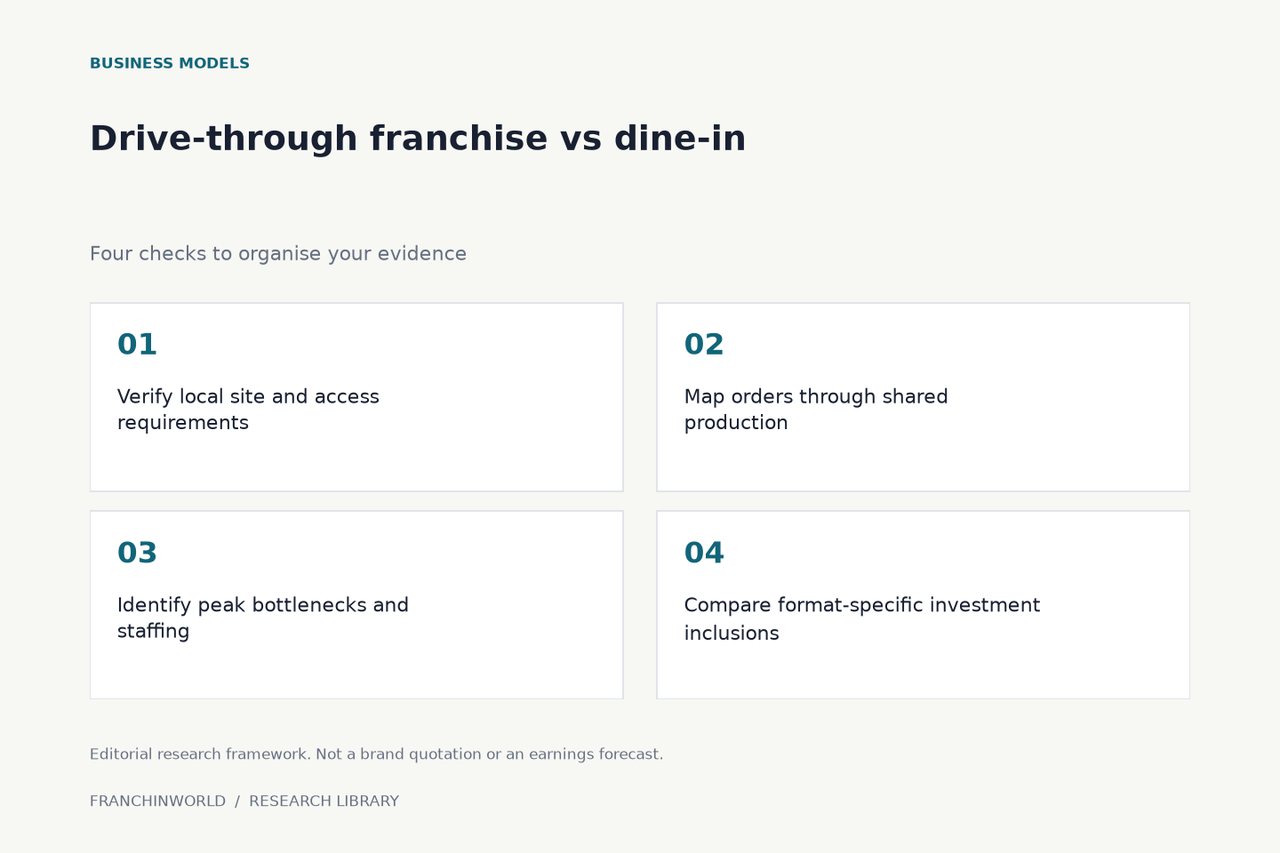
Compare restaurant formats through vehicle access, kitchen throughput and complete site requirements.
 01
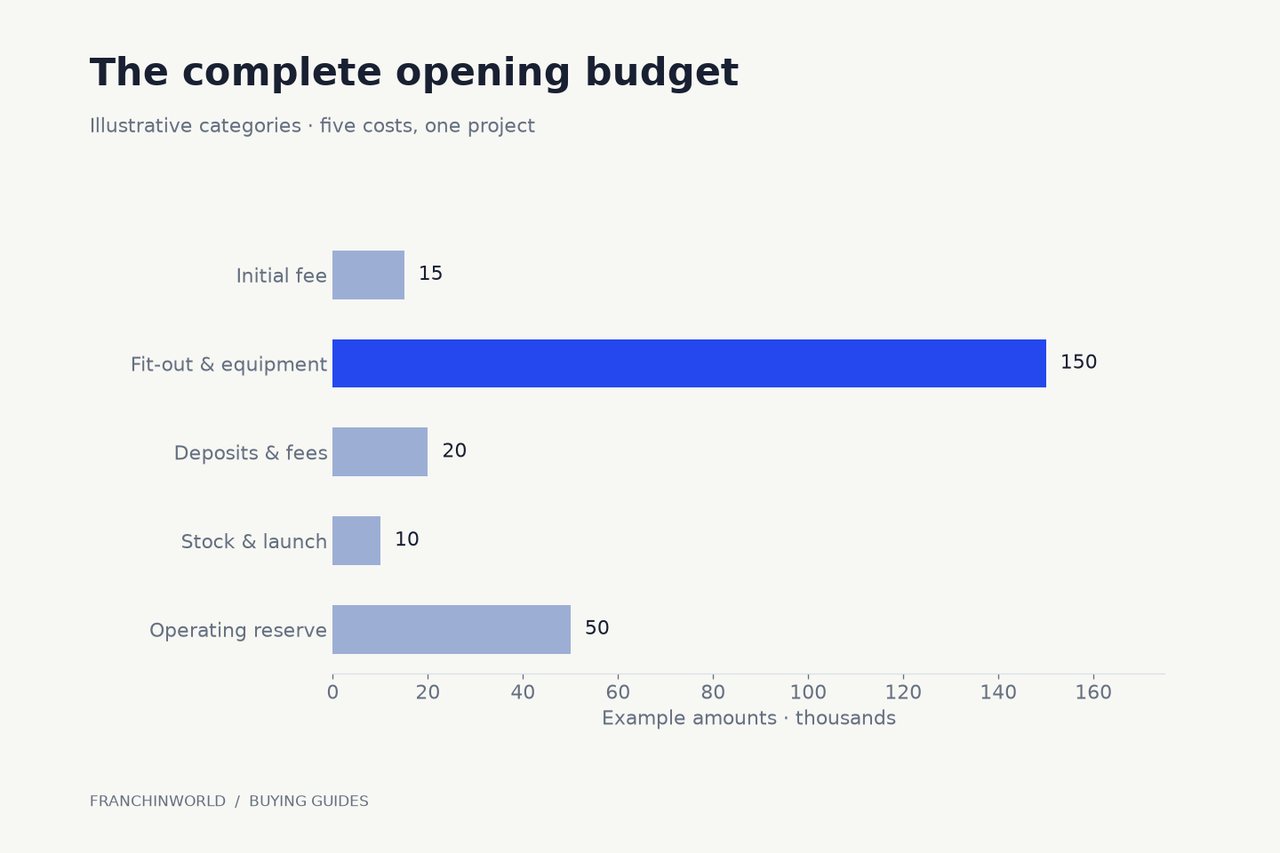
Build a complete opening budget, from the franchise fee to working capital.
Read the guide →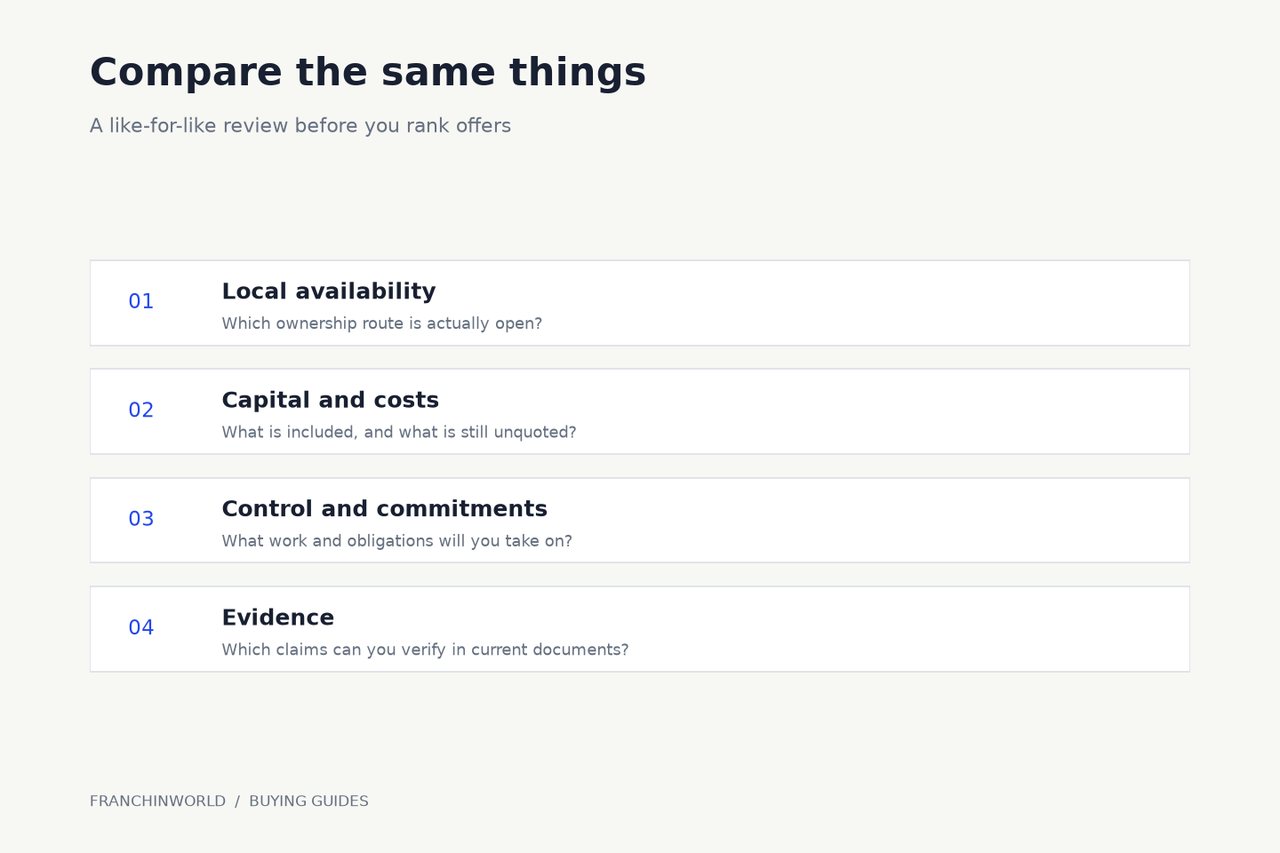 02
A practical framework for comparing availability, commitments and costs.
Read the guide →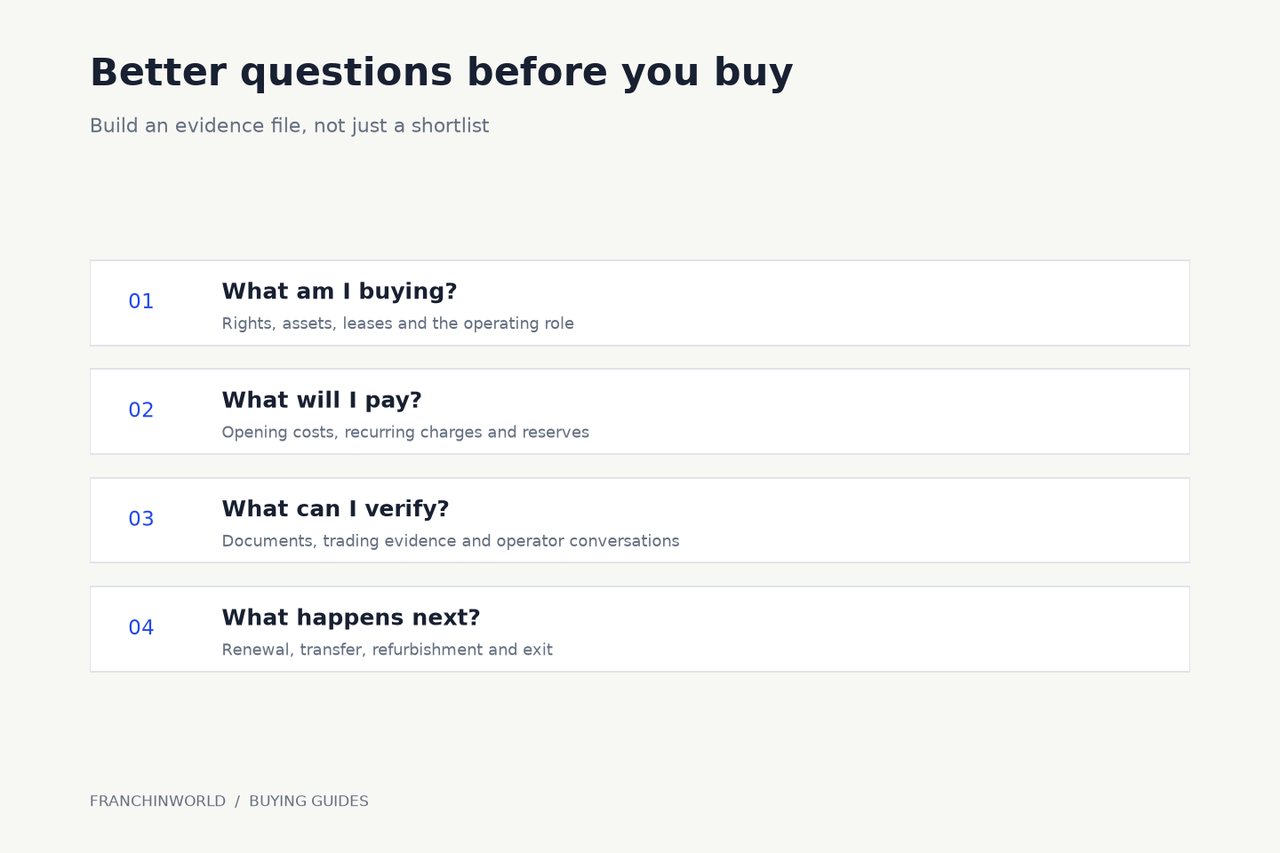 03
Turn your shortlist into a focused conversation with each franchisor.
Read the guide →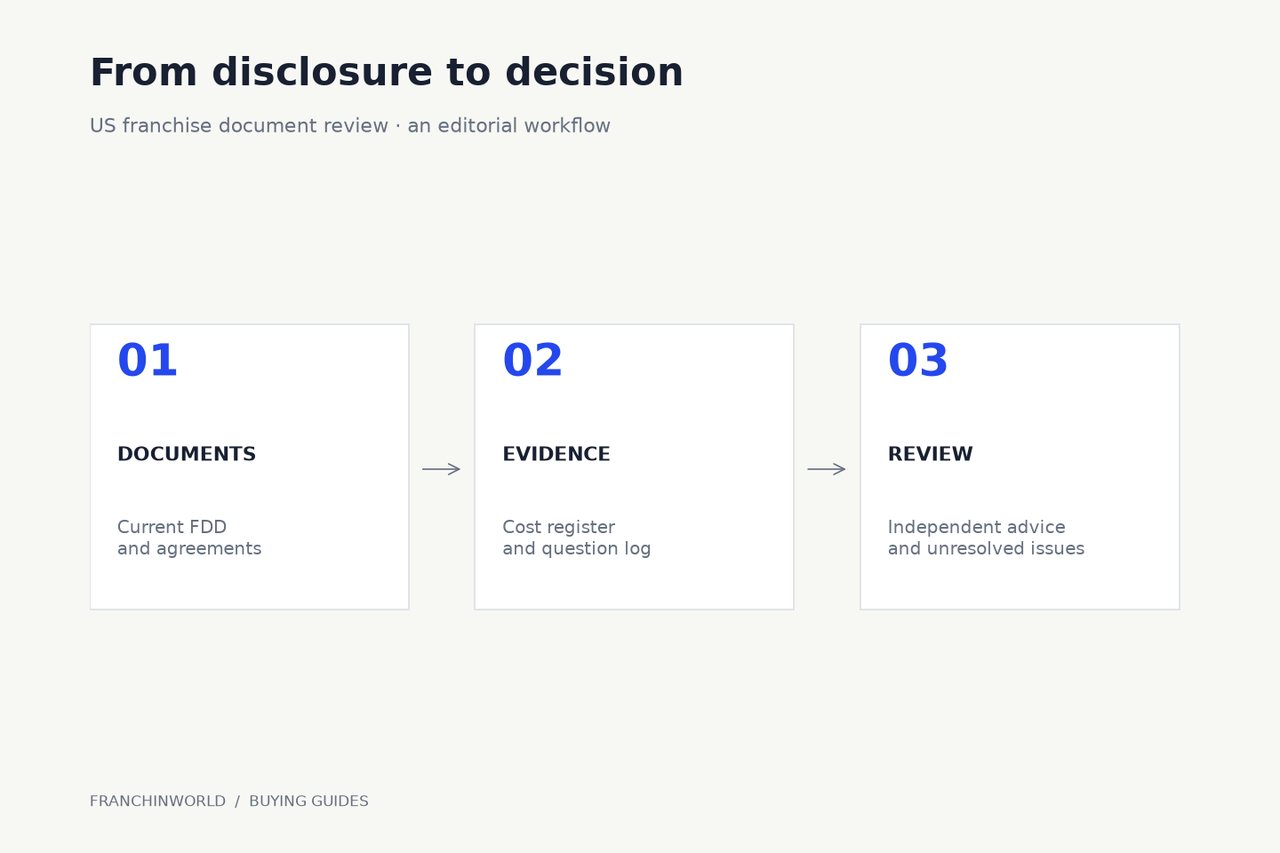 04
Build an evidence file and a question log for your US franchise review.
Read the guide →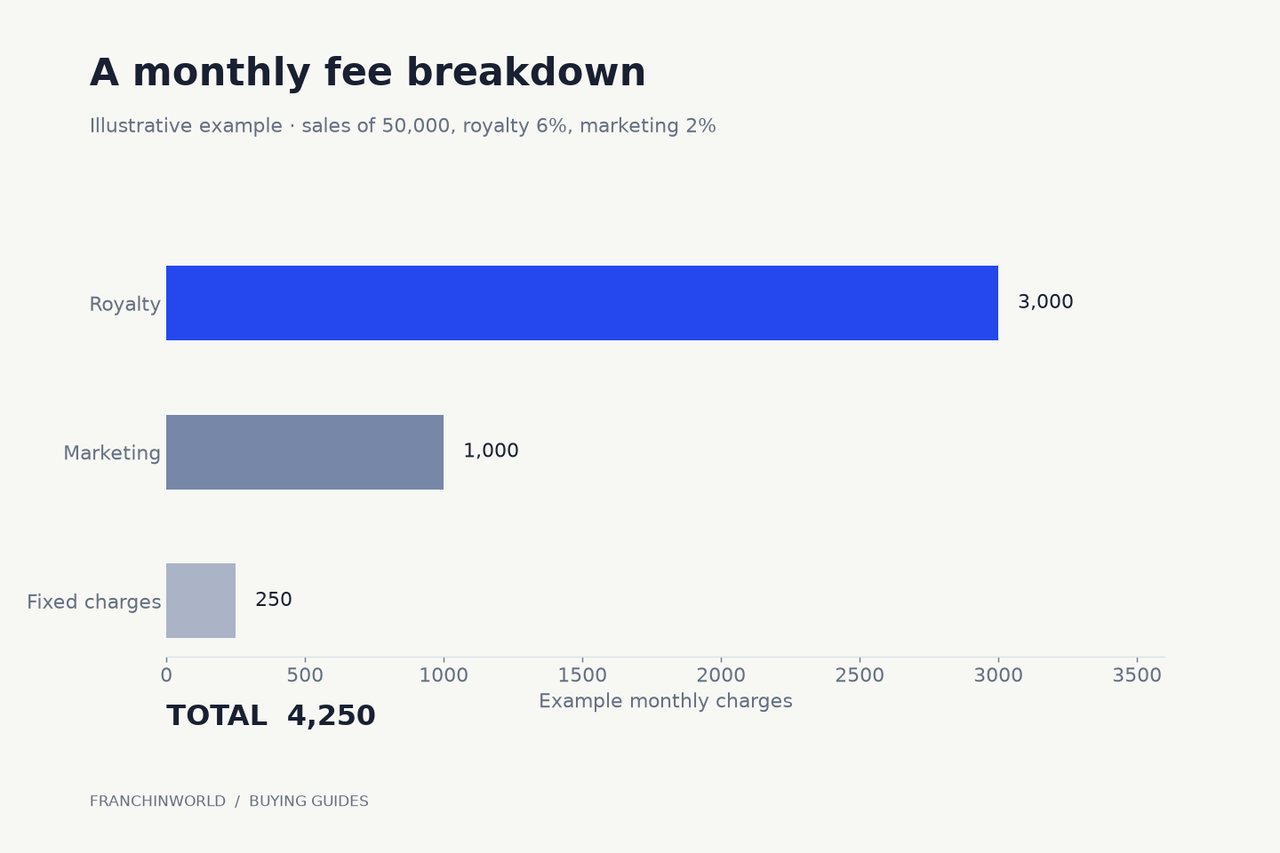 05
Model monthly percentage charges and fixed fees with an interactive calculator.
Read the guide →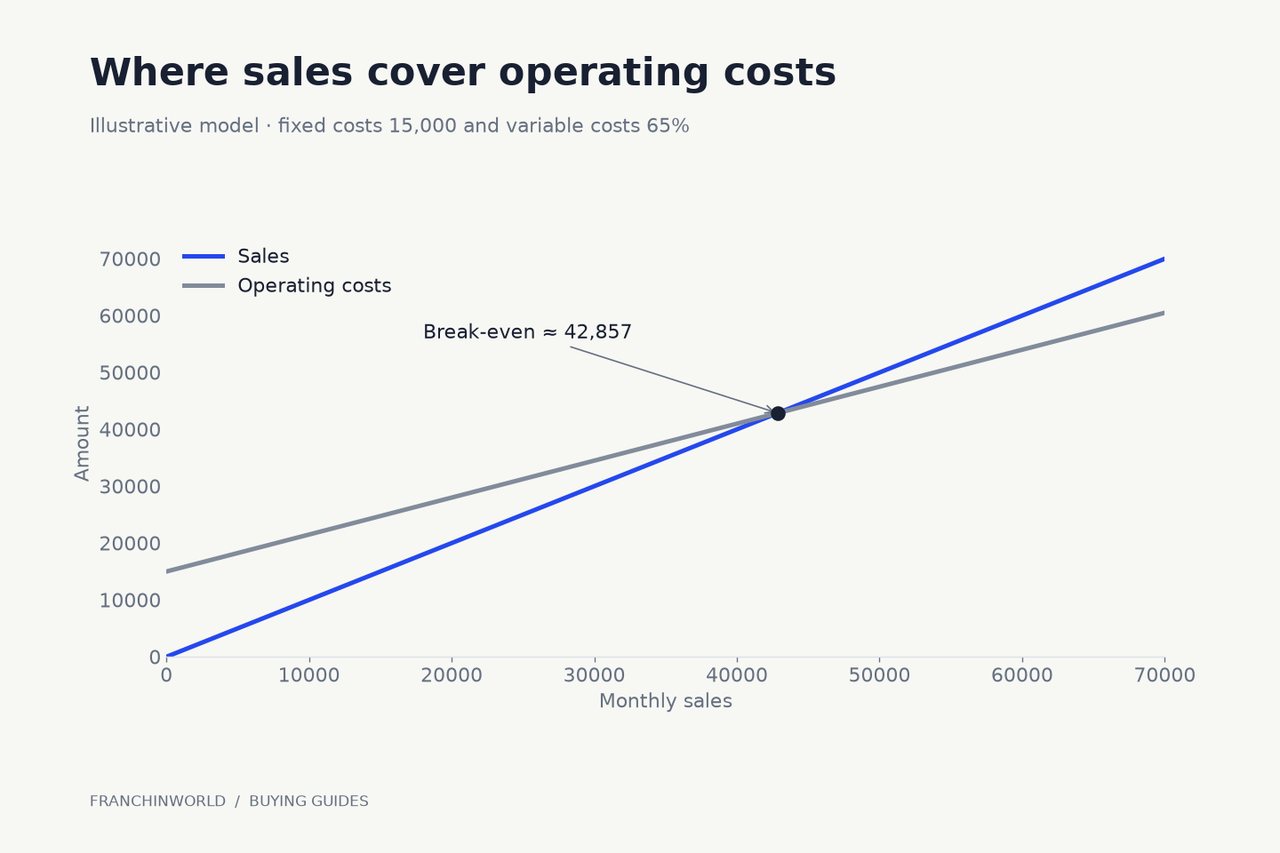 06
Test the sales your operating cost assumptions would require.
Read the guide →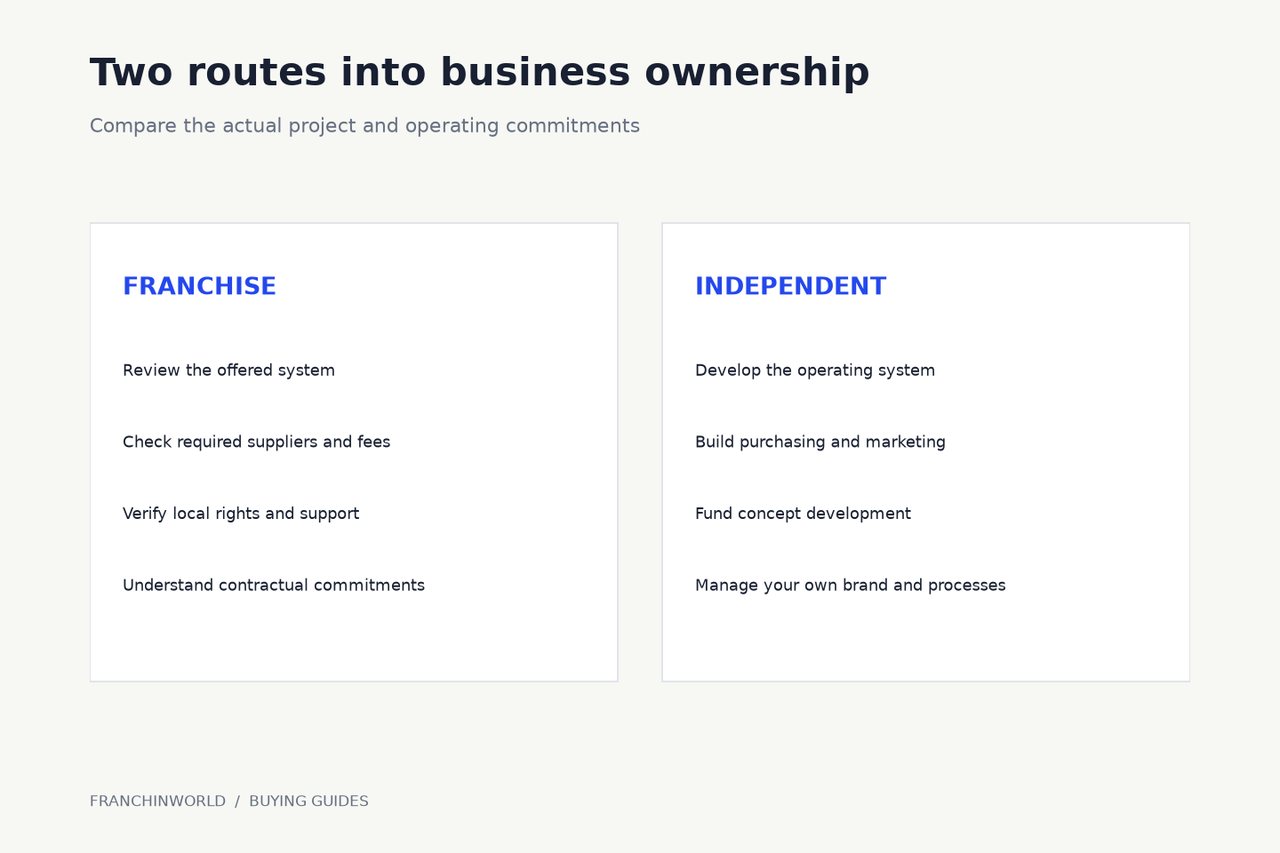 07
Compare control, support, costs and the work each route requires.
Read the guide →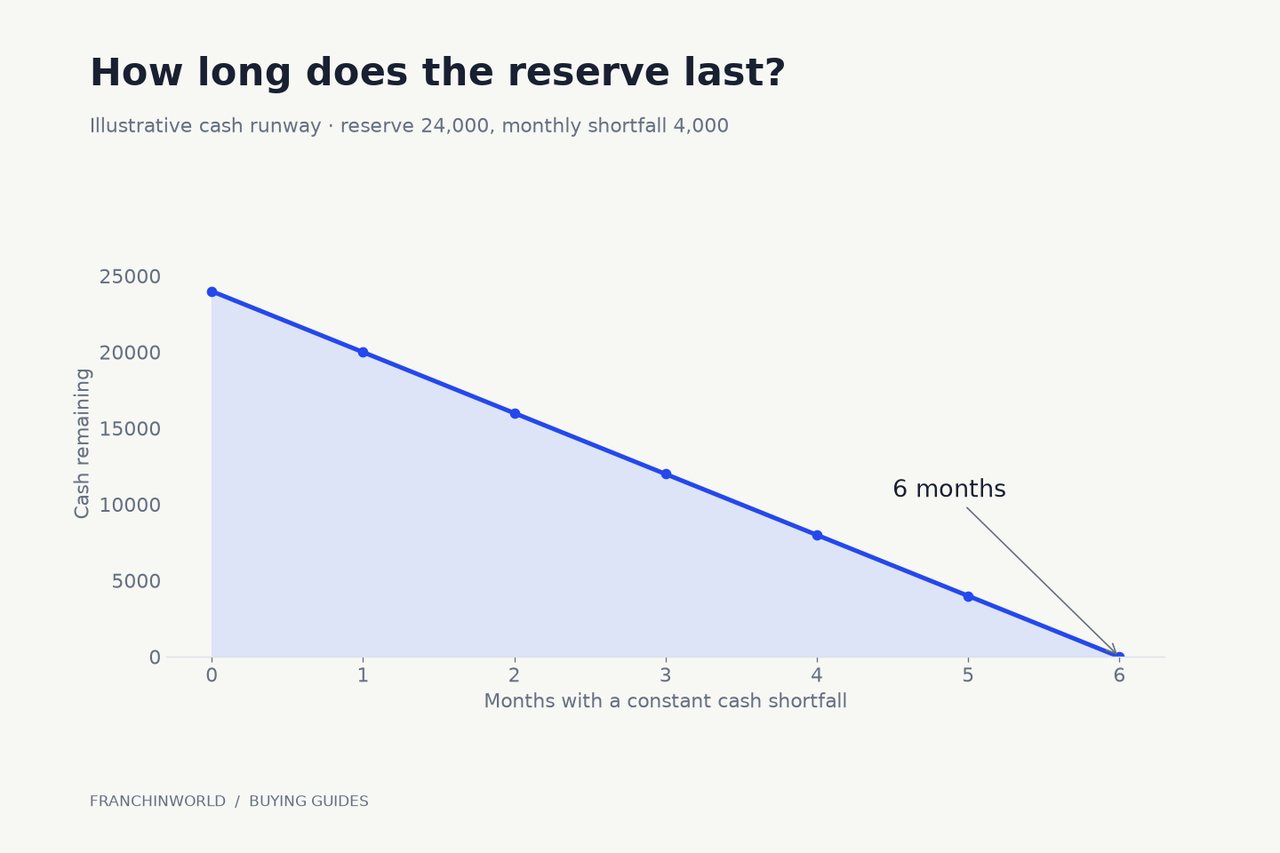 08
Separate accounting working capital from cash runway, with a reserve calculator.
Read the guide →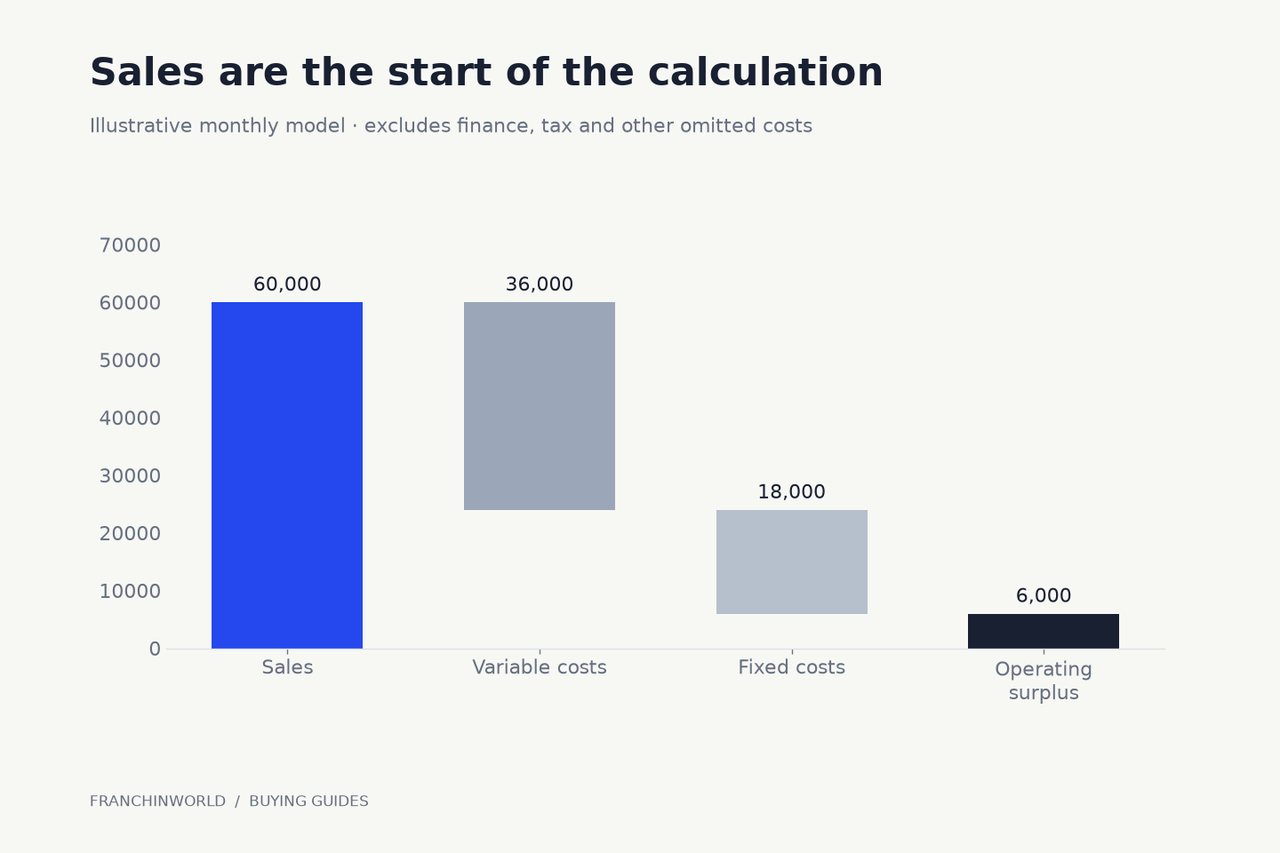 09
Use a worked example to distinguish sales, operating surplus and available cash.
Read the guide →