Food waste is an operating signal as well as a discarded product. Separate the causes before changing ordering, preparation or portions. A useful log shows where loss arises and what a small controlled change achieves.
Define comparable measurements
Choose a consistent unit and record preparation waste, spoiled stock and returned portions separately where practical. Note the trading period and production volume. Different causes require different responses, so one combined weight figure may not explain the problem.
Connect the log to purchasing decisions
Review order frequency, shelf life, batch size and demand assumptions with the relevant team. Keep food safety, brand standards and applicable rules as constraints; waste reduction does not justify unsafe storage or extending use beyond appropriate limits.
Trial one change and review it
Select a measured issue, assign a responsible person and compare results over relevant periods. Track service availability and customer experience alongside waste. Record actual purchasing and disposal effects rather than declaring every reduction an equal cash saving.
A worked research example
Illustrative example: a team records 12 units of unused prepared stock on comparable weekdays. Trialling smaller later batches tests overproduction, but the review must also check stockouts and service time. Fewer discarded units alone does not show the whole result.
Evidence to gather
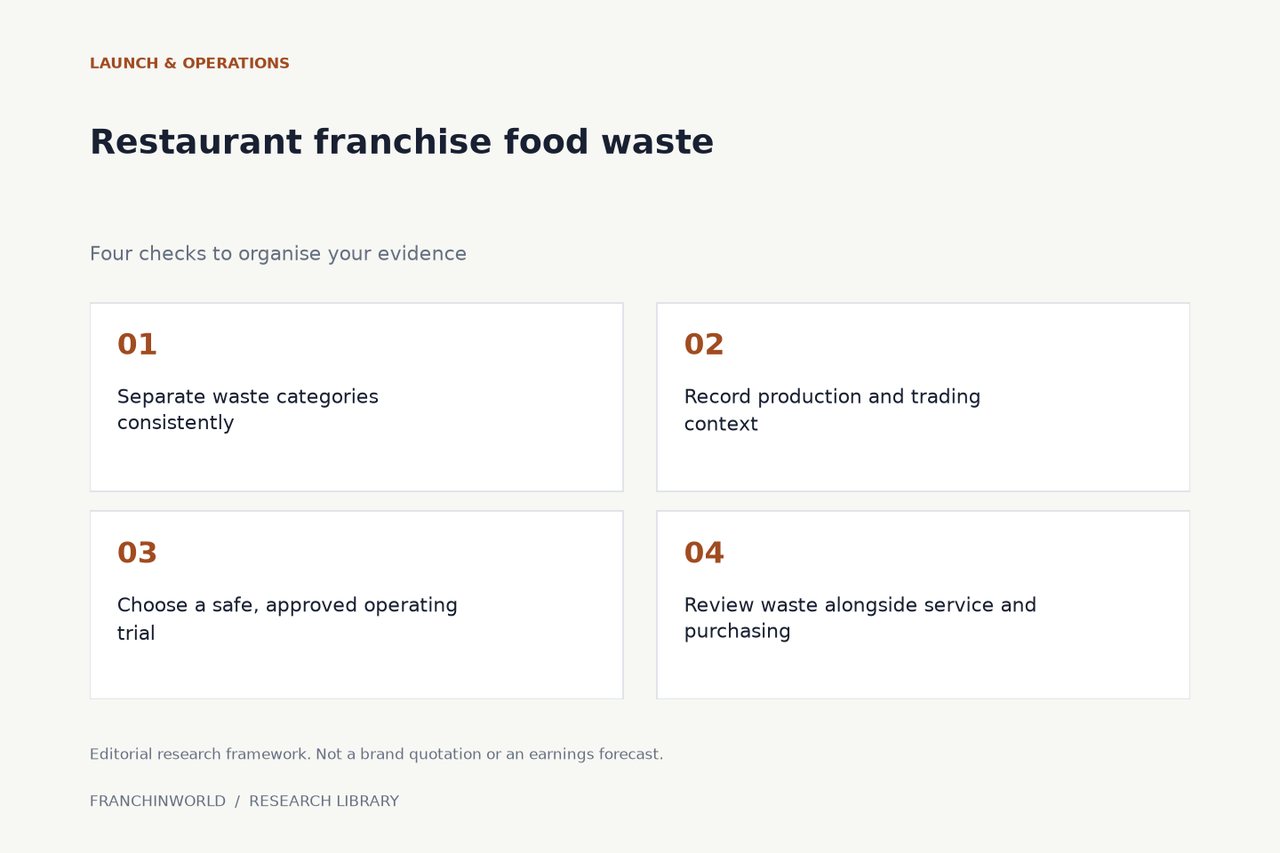
- Separate waste categories consistently
- Record production and trading context
- Choose a safe, approved operating trial
- Review waste alongside service and purchasing
Before you move forward
Frequently asked questions
Does lower waste always equal the same cash saving?
No. Purchasing, labour and disposal effects need separate measurement.
Should safety procedures change to reduce waste?
Never infer that from this guide. Follow applicable requirements and appropriate professional guidance.
Why measure different waste causes?
Spoilage, preparation loss and plate returns point to different operational questions.
Sources and scope
References checked 6 November 2026. The questions, examples and diagrams are our editorial research tools; they are not statements that every franchise has the same terms.
- WRAP — Guardians of Grub resources
Food-waste prevention and measurement resources; our example is original and hypothetical.
- SBA — Manage your business
General operating and finance background; local and contractual requirements still need checking.
General editorial information, not personalised legal, tax or financial advice. Confirm local requirements and the actual documents with appropriate advisers. Examples are hypothetical. Contact the editor or suggest a correction.
Continue your research