A royalty described as a percentage may also have a minimum payment. The effect is most visible when sales are low. Read the calculation rule before entering a single percentage into a spreadsheet.
Translate the clause into a rule
Determine whether the minimum replaces the percentage result, is added to it, or operates differently. Record the sales definition, assessment period, start date and any introductory arrangements. Do not infer a formula from a brochure that mentions only one part of the charge.
Test weak and strong sales periods
Run at least two sales scenarios using the same contract wording. Express the resulting royalty as a share of sales to see how the burden changes. A fixed floor can make the effective rate much higher during a slow opening period.
Keep unrelated charges separate
Advertising contributions, technology subscriptions and purchasing commitments can have their own minimums. Record each once and align payment timing. Our standard royalty worksheet models simple percentages and fixed charges; it does not automatically implement a greater-of minimum formula.
A worked research example
Illustrative rule: the greater of 6% of monthly sales or 1,200. At sales of 10,000, the payment is 1,200, an effective 12%. At 30,000, it is 1,800, or 6%. These are invented inputs, not a brand’s fee schedule.
Evidence to gather
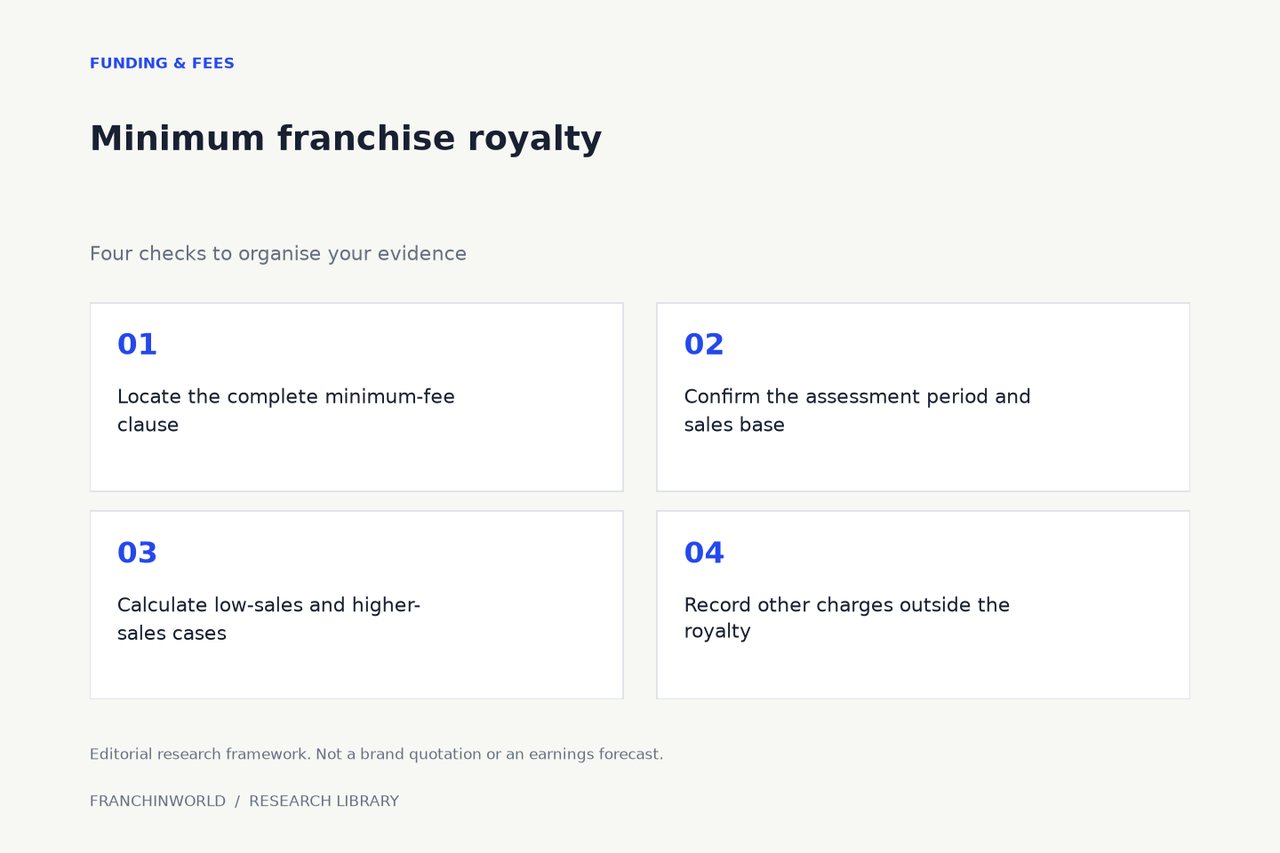
- Locate the complete minimum-fee clause
- Confirm the assessment period and sales base
- Calculate low-sales and higher-sales cases
- Record other charges outside the royalty
Before you move forward
Frequently asked questions
Is a minimum always added to the royalty?
No. It may replace the percentage result or follow another rule. Read the actual clause.
Can the effective rate exceed the advertised percentage?
Yes, where a minimum payment exceeds the percentage calculation at lower sales.
Does the standard calculator handle every minimum?
No. Complex minimums, tiers and caps need a separate calculation matching the agreement.
Sources and scope
References checked 6 November 2026. The questions, examples and diagrams are our editorial research tools; they are not statements that every franchise has the same terms.
- FTC — A Consumer’s Guide to Buying a Franchise
US franchise buying background; our questions and scenarios are independent editorial tools.
- SBA — Manage your business
General operating and finance background; local and contractual requirements still need checking.
General editorial information, not personalised legal, tax or financial advice. Confirm local requirements and the actual documents with appropriate advisers. Examples are hypothetical. Contact the editor or suggest a correction.
Continue your research