Approved purchasing arrangements can support consistency, but your operating model needs the delivered cost and the rules for alternatives. A product’s quoted unit price is only one part of that investigation.
Map required purchases
Separate products that must come from a named supplier from those requiring a specification or approval. Include equipment, packaging, software and services where applicable. Record who can amend the list and how you receive notice of changes.
Compare landed cost and stock demands
Add delivery charges, minimum orders, payment timing and storage needs. A lower unit price may require more inventory or larger orders. Ask about shortages, substitutions and service levels, using the actual operating format and expected order frequency.
Examine supplier relationships
Request the disclosures and explanations applicable to your market concerning affiliated suppliers or payments linked to purchasing. Have the agreement reviewed where the commercial effect is unclear. A relationship should be investigated on evidence, rather than assumed fair or unfair from its existence alone.
A worked research example
Illustrative example: product A costs 2.00 per unit with a 100-unit minimum and 25 delivery; product B costs 2.10 with delivery included at the same quantity. Delivered totals are 225 and 210 before other differences. Neither example describes a real brand.
Evidence to gather
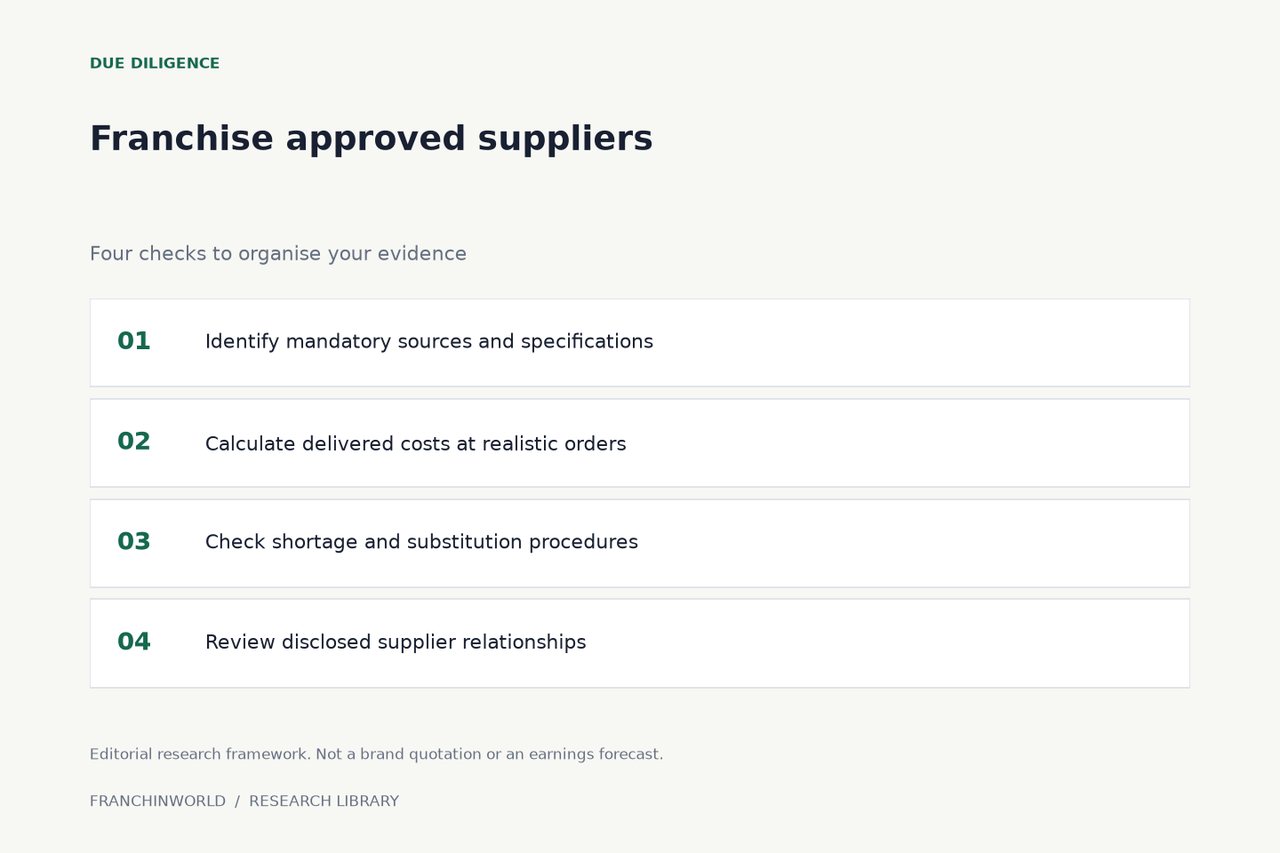
- Identify mandatory sources and specifications
- Calculate delivered costs at realistic orders
- Check shortage and substitution procedures
- Review disclosed supplier relationships
Before you move forward
Frequently asked questions
Does the cheapest unit price mean the lowest cost?
No. Delivery, minimum orders, waste and payment terms can change the result.
Can I substitute a supplier without approval?
Check the agreement and approval process before changing required supplies.
Are supplier rebates automatically improper?
Do not infer a legal conclusion. Review applicable disclosures and obtain advice about the arrangement.
Sources and scope
References checked 6 November 2026. The questions, examples and diagrams are our editorial research tools; they are not statements that every franchise has the same terms.
- eCFR — 16 CFR 436.5, disclosure items
US federal disclosure-item structure; not a review of a particular offer or all state requirements.
- SBA — Manage your business
General operating and finance background; local and contractual requirements still need checking.
General editorial information, not personalised legal, tax or financial advice. Confirm local requirements and the actual documents with appropriate advisers. Examples are hypothetical. Contact the editor or suggest a correction.
Continue your research